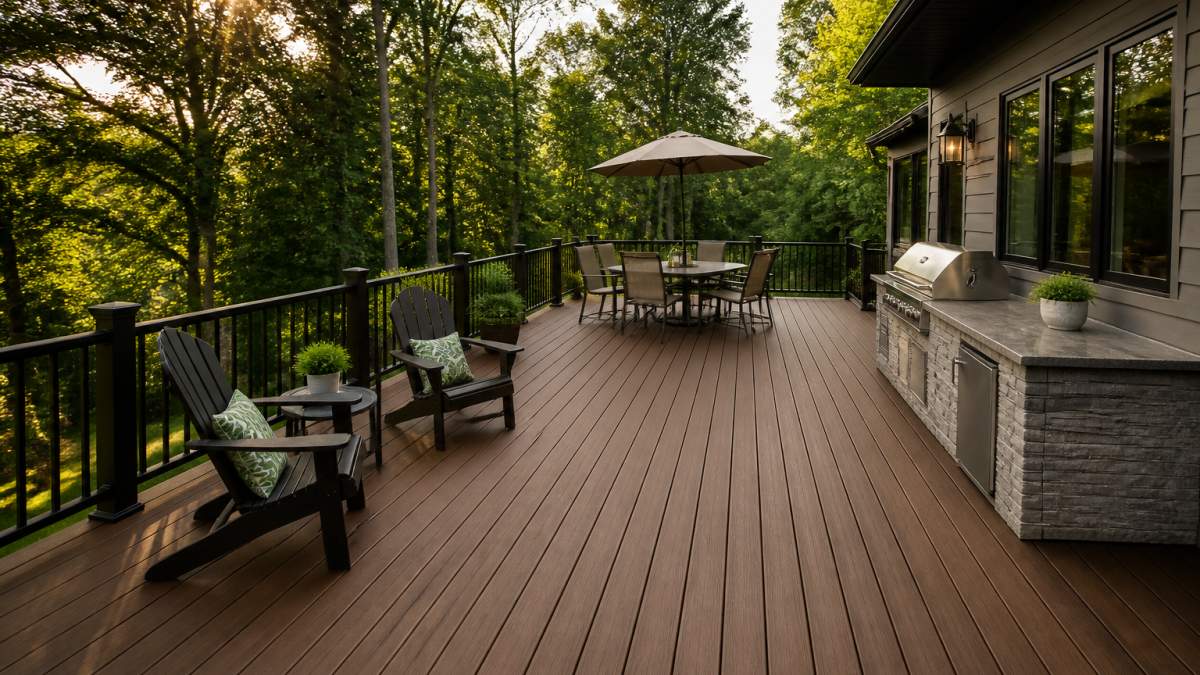
 blog
blog
Best Materials for Durable Outdoor Decks in 2026
Table of Contents
- What Makes an Outdoor Deck Material Durable?
- Natural Wood Options: Cedar, Ipe, and Pressure-Treated
- Composite Decking vs. Wood: Performance and Trade-Offs
- PVC Decking vs. Composite Decking: Which Wins?
- Decking Material Lifespan: How Long Each Option Lasts
- Decking Materials Cost Comparison: Upfront vs. Lifecycle
- Which Deck Material Fits Your Climate and Lifestyle?
- Conclusion: Choosing the Right Material for Your Custom Deck
- Frequently Asked Questions
Last Updated: October 5, 2026
What Makes an Outdoor Deck Material Durable?
If you're comparing the best materials for durable outdoor decks, the short answer is this: durability comes down to how a material handles moisture, sunlight, temperature swings, and foot traffic over decades, not months.
Durability is the ability of a decking material to resist rot, insects, moisture, UV fading, warping, and structural fatigue across its full service life. Four forces do most of the damage: water, sun, temperature changes, and physical wear.
The Four Forces That Destroy Decks
- Moisture: Trapped water causes rot, mold, and swelling in natural wood.
- UV exposure: Sunlight breaks down lignin in wood and fades pigments in synthetics.
- Temperature changes: Freeze-thaw cycles and heat cause expansion, contraction, and warping.
- Foot traffic and abrasion: Constant use wears down surface texture, causing splintering or scratching.
A deck that resists all four lasts far longer than one that only handles a couple.
Natural Wood Options: Cedar, Ipe, and Pressure-Treated
Natural wood remains the classic choice, and three species dominate the conversation. Cedar is naturally rot- and insect-resistant, lightweight, and easy to work with, but it's soft enough to dent and needs regular sealing. Ipe and other tropical hardwoods are exceptionally dense and hard, offering outstanding rot and insect resistance, though they cost more and require specific fasteners. Pressure-treated wood is the budget option, treated to resist rot and insects, but it demands the most maintenance and has the shortest lifespan of the three.
For homeowners who want warmth and real wood grain, cedar and hardwoods deliver. Just budget for sealing and staining every year or two.
Composite Decking vs. Wood: Performance and Trade-Offs
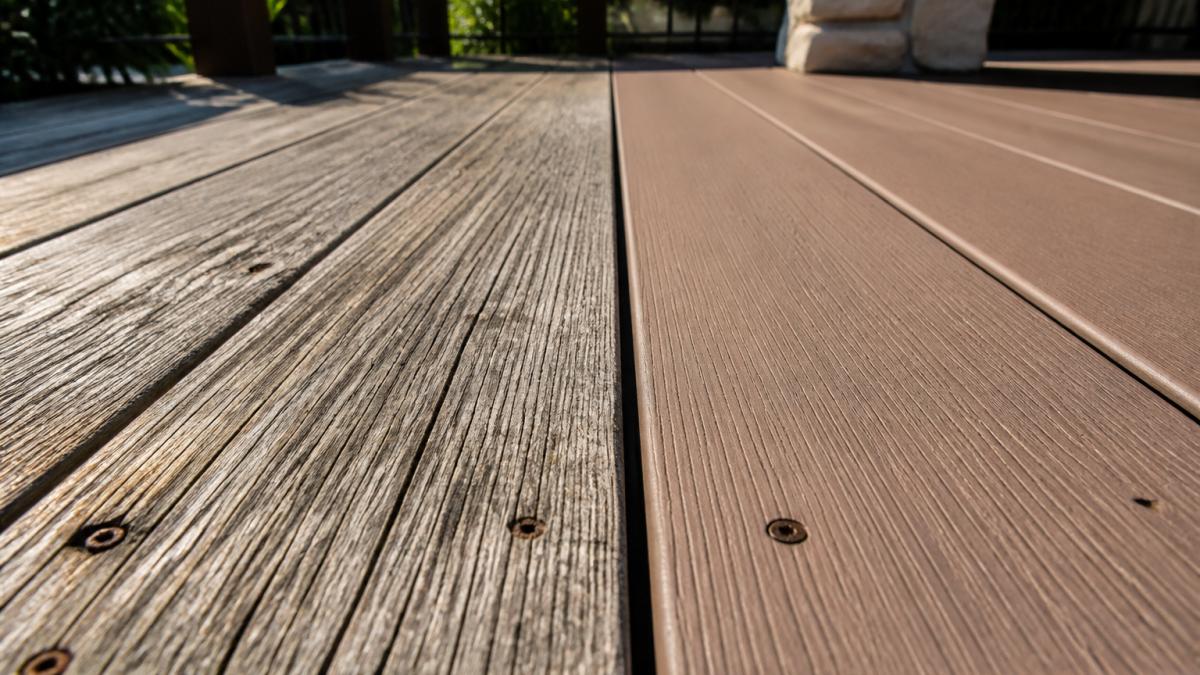
Composite decking is a mix of wood fibers and plastic, engineered to look like wood with far less upkeep. Compared with natural wood, composites resist moisture, rot, and insects and hold their color longer.
Wood wins on natural appearance and repairability; you can sand and refinish a board. Composite wins on low maintenance. Neither is universally better, it depends on how you use the space.
| Feature | Natural Wood | Composite Decking | PVC Decking |
|---|---|---|---|
| Maintenance | High (sealing, staining) | Low | Lowest |
| Moisture resistance | Low to moderate | High | Highest |
| Fade resistance | Moderate | Moderate to high | High |
| Best for | Natural look, budget | Balanced performance | Wet climates, low upkeep |
PVC Decking vs. Composite Decking: Which Wins?
PVC decking is made entirely of plastic, with no wood content. That means it resists moisture, fading, and staining better than composite and never supports mold or rot. It also stays cooler than many composites and cleans easily.
Composite still has the edge in realistic wood-grain appearance and often costs less. If your priority is the lowest possible maintenance in a wet or humid climate, PVC wins.
Decking Material Lifespan: How Long Each Option Lasts
Lifespan is the single most misunderstood number in decking. Manufacturers quote warranty terms, contractors quote best-case scenarios, and homeowners repeat whichever figure they heard last. The honest answer is that service life is a range, and where a deck lands inside that range depends on four variables: the material itself, how it was installed, how it is maintained, and what it is exposed to.
Warranty Term Is Not Service Life
A warranty is a legal promise about defects, not a prediction of how long the deck will look good. Most composite and PVC boards carry limited warranties that run from 25 years to the lifetime of the original purchaser, but those terms typically exclude fading below a stated threshold, scratches, stains, and damage from improper installation or cleaning. Wood has no meaningful warranty at all.
Realistic Service Life by Material
These ranges reflect common practitioner experience across well-installed decks in mixed exposures. Treat them as planning ranges, not guarantees.
- Pressure-treated wood: roughly 10 to 15 years for the structural framing and often 15 to 20 years for the decking surface with regular sealing. Untreated or neglected boards can fail in under 10 years in wet climates.
- Cedar and redwood: commonly 15 to 25 years when sealed every one to two years. The heartwood is far more durable than the sapwood, so board grade matters as much as species.
- Tropical hardwoods (ipe, cumaru, garapa): frequently 25 to 40 years, and longer in dry climates. Density and natural extractives do the work; maintenance mainly preserves color rather than structure.
- Capped composite: typically 20 to 30 years. The polymer cap protects against moisture and staining, but the core can still swell if cut edges and fastener holes are not sealed.
What Actually Shortens a Deck's Life
The material is only part of the equation. These installation and site factors routinely cut years off a deck regardless of what it is made of:
- Poor ventilation and drainage. A deck built tight to the ground traps moisture underneath. The industry-standard minimum is 12 inches of clearance below the joists for adequate airflow, and more is better in humid regions.
- Joist spacing that exceeds the board's rating. Most composite and PVC boards require joists at 12 or 16 inches on center, closer than the 16 inches typical for wood. Wider spacing causes sagging and premature fatigue.
- Missing expansion gaps. Synthetic boards expand and contract with temperature. End-to-end and side-to-side gaps sized to the manufacturer's spec prevent buckling and edge contact.
- Wrong fasteners. Stainless steel or hot-dip galvanized fasteners are required for treated lumber and tropical hardwoods; standard screws corrode and stain the surface within a few seasons.
Lifespan by Exposure
Where the deck sits changes the math more than most buyers expect. A shaded north-facing deck in a humid region may see mold and mildew pressure that shortens a wood deck's life by several years, while the same deck in full sun dries faster and lasts longer but fades sooner. Coastal salt air accelerates corrosion of fasteners and hardware long before the boards themselves fail.
Decking Materials Cost Comparison: Upfront vs. Lifecycle
Most decking cost comparisons stop at the price per square foot of the boards. That number is real, but it is the smallest part of the story. A deck is a system, framing, fasteners, labor, finishes, and eventual replacement, and the material you choose changes every line item in that system over the life of the deck.
The Line Items That Actually Drive Cost
When you price a deck, these are the buckets that matter:
- Materials: boards, joists, beams, posts, railings, fasteners, flashing, and any hidden fastening system.
- Labor: installation complexity varies widely. Hidden clip systems and PVC boards are slower to install than face-screwed wood, and that labor difference is often larger than the material difference.
- Finishes: sealers, stains, and cleaners for wood; specialty cleaners for composites and PVC.
- Repairs: board replacement, fastener replacement, and refinishing.
A Consistent Time Horizon Makes the Comparison Honest
The only fair way to compare materials is to pick a horizon and count everything that happens inside it. A 25-year horizon is a reasonable planning window because it captures at least one full replacement cycle for the shorter-lived materials while staying inside the warranty period of most synthetics.
Over 25 years, the pattern typically looks like this:
- Pressure-treated wood: lowest upfront cost, but expect to seal or stain every one to two years, replace individual boards periodically, and replace the entire surface once. The cumulative spend often overtakes the initial savings within the first decade.
- Cedar and redwood: moderate upfront cost, similar maintenance cadence to treated wood but with better natural durability, and usually one surface replacement within the horizon.
- Tropical hardwoods: high upfront cost, low maintenance beyond occasional oiling, and often no surface replacement inside 25 years. The premium is largely paid back through avoided labor and replacement.
- Capped composite: moderate-to-high upfront cost, minimal maintenance, and typically no full replacement inside the horizon. The main lifecycle risk is cosmetic fading or scratching that you choose to live with rather than replace.
- PVC: highest upfront cost, lowest maintenance, and the longest expected service life of the group. The premium is hardest to justify on a short horizon and easiest to justify on a long one.
Why the Cheapest Deck Rarely Stays the Cheapest
The reason pressure-treated wood loses the lifecycle race is not the boards, it is the recurring labor. Sealing and staining is either your weekends or your contractor's invoice, and it repeats every year or two for the life of the deck. Add one full surface replacement and the total cost of ownership climbs past materials that looked expensive on day one.
Where the Numbers Get Fuzzy
Two honest caveats. First, regional labor rates and material availability swing the totals enough that a national average is misleading; get local quotes for the materials you are actually considering. Second, the value of your own time is real. If you plan to do the sealing and staining yourself, the dollar cost of wood drops but the time cost does not.
Ask any contractor for a 25-year cost estimate, not just a bid. A bid tells you what the deck costs today. A 25-year estimate tells you what owning it costs, and that is the number that should drive the material decision.
Which Deck Material Fits Your Climate and Lifestyle?
Climate and lifestyle should drive the decision more than trends. In humid or rainy regions, PVC and composite resist moisture best. In dry, sunny climates, fade resistance and heat retention matter most, so lighter colors and PVC help. For entertaining families who want minimal upkeep, composite or PVC frees up weekends. For purists who love real wood and don't mind maintenance, cedar or hardwood is worth it.
For barefoot comfort on sunny decks, choose lighter-colored boards. Darker surfaces absorb more heat and can become uncomfortable underfoot in direct sun.
Conclusion: Choosing the Right Material for Your Custom Deck
Choosing among the best materials for durable outdoor decks comes down to balancing climate, maintenance tolerance, budget, and the look you want. There's no single winner, only the right fit for your home and how you live.
That's where Lush Design Build LLC comes in. We design custom outdoor structures tailored to your home's architecture, integrate premium materials and durable finishes, and handle everything from concept to installation.
Frequently Asked Questions
How long do wood, composite, and PVC deck boards last?
Pressure-treated wood typically lasts 10 to 15 years, cedar can reach 15 to 20 years with regular sealing, and tropical hardwoods like ipe can exceed 25 years. Composite decking generally lasts 25 to 30 years, while PVC decking often reaches 30 years or more. Actual lifespan depends on climate, sun exposure, installation quality, and maintenance. In hot or wet climates, synthetic boards outperform wood because they resist rot, insects, and moisture damage more effectively.
Is composite or PVC decking more durable?
PVC decking is generally more durable than composite because it contains no wood fibers, making it fully resistant to moisture, rot, and insects. Composite decking still performs well but can absorb some moisture over time, leading to mold or fading in extreme conditions. PVC also holds color better under UV exposure. However, composite often costs less and offers a more natural wood grain appearance. For maximum durability in wet or humid climates, PVC is the stronger choice.
Which decking material works best in hot or wet climates?
In hot climates, PVC and capped composite decking resist fading and warping better than natural wood. Light-colored boards stay cooler underfoot. In wet climates, PVC and composite resist rot, mold, and insect damage that destroy wood over time. Tropical hardwoods like ipe also perform well in moisture but require more maintenance. For low-maintenance performance in either extreme, PVC decking is the most reliable option for durable outdoor decks.
What is the lowest-maintenance material for an outdoor deck?
PVC decking requires the least maintenance. It never needs sealing, staining, or painting. A periodic wash with soap and water keeps it looking new. Capped composite decking is a close second, needing only occasional cleaning. Both resist stains, scratches, and fading. Natural wood, by contrast, needs sealing every one to two years and refinishing every few years to prevent rot and splintering. For homeowners who want a durable outdoor deck without ongoing upkeep, PVC or capped composite are the best choices.