 blog
Top 5 Luxury Deck Features for High-End Homes
Last Updated: October 23, 2026
Quick Summary
The top luxury deck features for high-end homes are custom designs that connect indoors and out, premium materials like hardwood and capped composite, covered roof structures for year-round use, layered LED lighting with smart controls, and built-in amenities such as fire pits and outdoor kitchens. Each feature must be planned with structure, drainage, and code details before framing goes up.
- Walk the site at different times of day to plan sight lines before drawing the deck.
- Stainless steel fasteners prevent rust staining and connection failures in wet, freeze-thaw conditions.
- A covered zone paired with an open section gives homeowners both shelter and full sun.
- Layered lighting uses step lights for safety, railing lights for wayfinding, and overhead fixtures.
- Built-in amenities added after the deck is finished cost more and perform worse.
Table of Contents
- Why the Right Luxury Deck Features Transform a High-End Home
- 1. Custom Deck Design Ideas That Connect Indoors and Out
- 3. Covered Deck Ideas for Year-Round Outdoor Living
- 4. Deck Lighting Ideas and Integrated Smart Controls
- 5. Built-In Entertainment, Seating, and Outdoor Amenities
- Planning, Permits, and Choosing the Right Contractor
- Conclusion
- Frequently Asked Questions
Why the Right Luxury Deck Features Transform a High-End Home
A luxury deck is an engineered extension of the house, not a platform added to the back of it.
A deck is the most exposed structure on the property, taking sun, freeze-thaw cycles, and constant foot traffic while sitting in full view of the main living spaces.
Below, we rank the five features that separate a high-end deck from an expensive one, with the planning notes that decide whether each actually works.
1. Custom Deck Design Ideas That Connect Indoors and Out
The strongest luxury deck design ideas begin at the door, not at the property line. A well-designed deck continues the interior floor level, repeats the home's roof lines, and gives every room that faces it a reason to open outward.
Hardwood Lumber: Cedar, Redwood, Mahogany, and Tigerwood
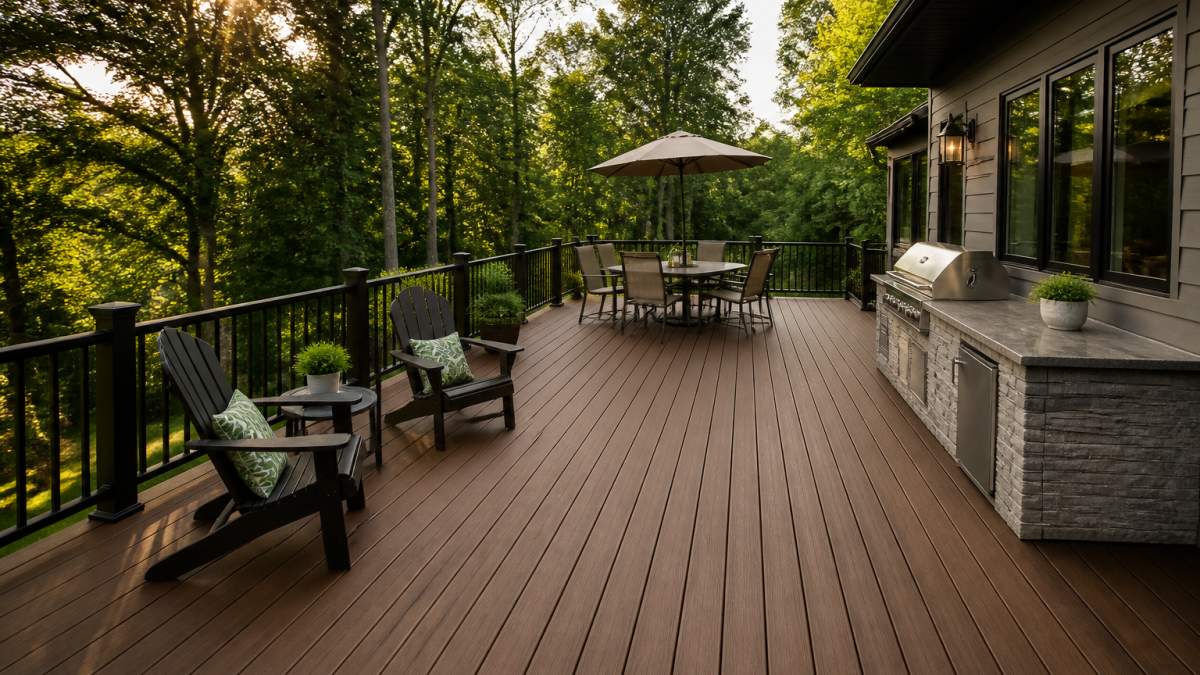
Cedar and redwood bring warmth and a natural texture composite still struggles to match, while mahogany and Tigerwood offer a denser, more exotic look with striking grain. All four are genuine hardwood lumber that want periodic cleaning and refinishing to hold color. Denser species resist dents and moisture better but demand pre-drilling and stainless fasteners to avoid staining and splitting.
Composite Decking and Pressure-Treated Wood
Composite decking has improved dramatically, with capped boards that resist fading and staining and hold consistent color across the run. The cap is the performance story: a fully capped board shields the core from moisture and UV, holding color longer than early-generation composites. Pressure-treated wood remains the value play, proven, repairable, and takes paint or stain well, but needs more frequent attention and won't deliver the same premium finish without extra detailing.
Climate Resilience, Drainage, and Material Performance
This is where most deck material discussions stop short. In a climate with pronounced freeze-thaw cycles, water is the enemy, not heat, and the material matters less than how water leaves the deck.
Fasteners deserve the same scrutiny. Stainless steel prevents the rust staining and premature connection failures galvanized hardware can develop in wet, freeze-thaw conditions. Hidden fastener systems improve the look but must be compatible with the board's expansion profile.
Lifecycle and Maintenance Trade-Offs
We plan around lifecycle. Hardwood decks need cleaning and refinishing on a regular rhythm to hold color and repel moisture; skip it and the wood grays and checks faster. Capped composites need occasional cleaning and little else, but they are not maintenance-free, dirt, pollen, and mildew still accumulate, and damaged boards are replaced rather than sanded. Pressure-treated lumber sits in the middle: refinishing every few years keeps it serviceable.
| Material | Look and Feel | Maintenance Demand | Climate and Performance Notes | Best For |
|---|---|---|---|---|
| Cedar / redwood | Warm, natural grain | Periodic cleaning and refinishing | Softer species; needs airflow and flashing detail | Homeowners who want real wood character |
| Mahogany / Tigerwood | Dense, exotic grain | Regular oiling to hold color | Dense, moisture-resistant; requires stainless fasteners and pre-drilling | Statement decks with rich tone |
| Composite (capped) | Uniform, low-variation finish | Occasional cleaning | UV-stabilized cap resists fading; expands and contracts with temperature | Low-maintenance, consistent color |
| Pressure-treated wood | Utilitarian until finished | Refinishing every few years | Proven and repairable; needs vigilant flashing and fastener detail | Budget-conscious, repairable builds |
3. Covered Deck Ideas for Year-Round Outdoor Living
A covered deck turns three-season use into four-season use, the difference between a deck you abandon in November and one you use through a rainy afternoon in April.
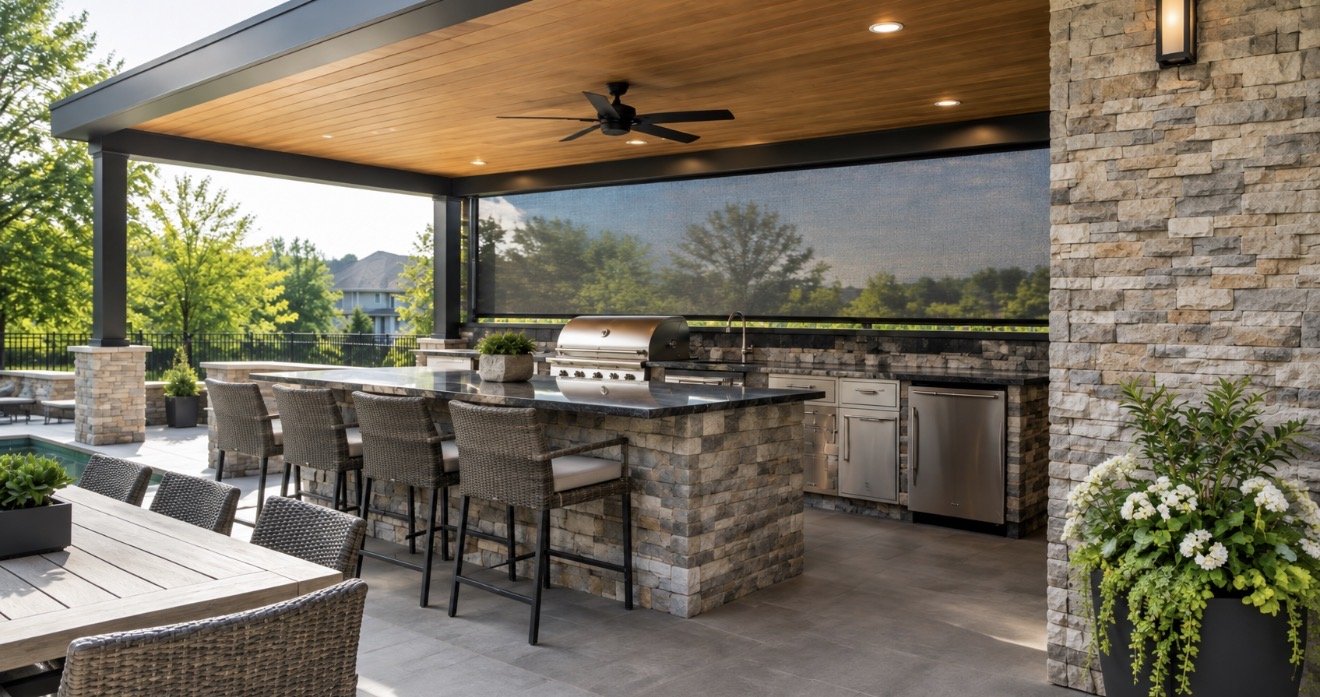
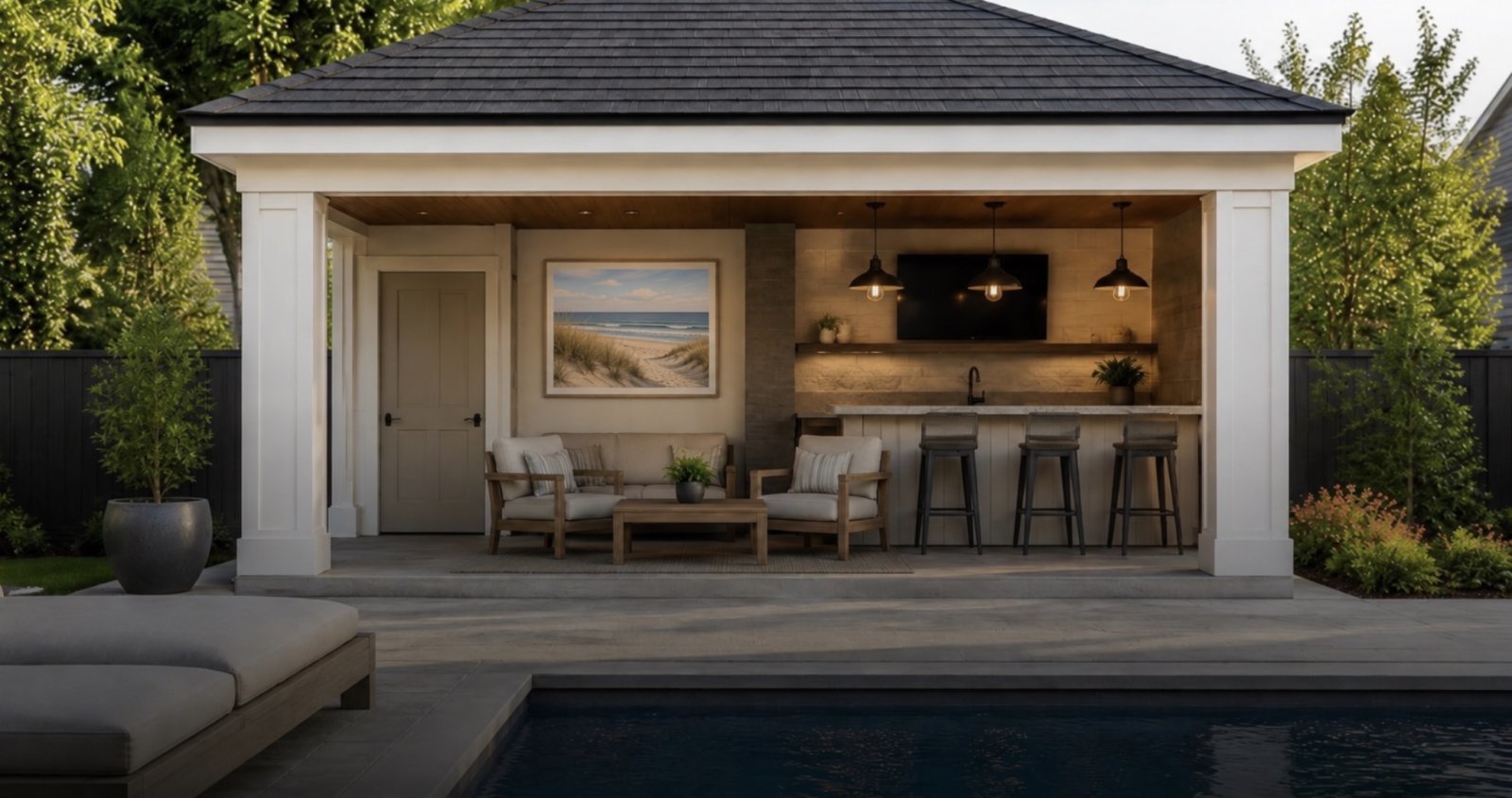
The best covered deck ideas solve shade, rain, and glare in one move. A solid roof with a cedar-planked ceiling creates a genuine outdoor room, while an open pergola defines space without blocking light.
4. Deck Lighting Ideas and Integrated Smart Controls
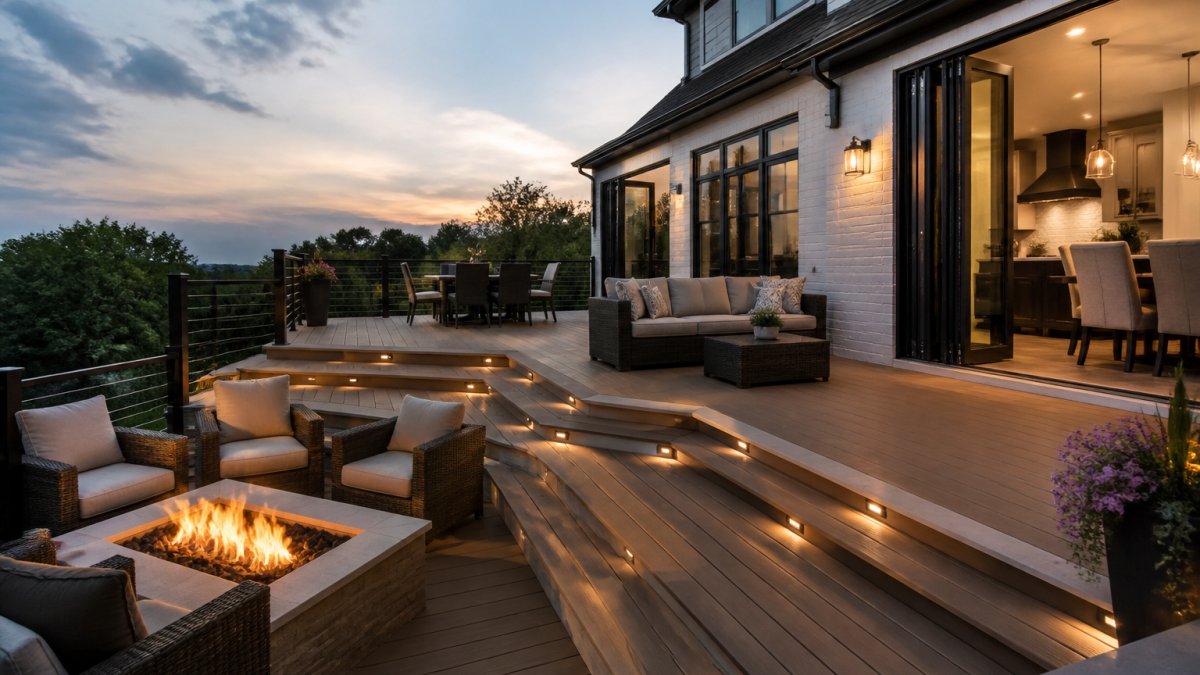
Deck lighting ideas have moved well past a string of bulbs. Recessed LED lighting set into steps, railings, and ceiling delivers safety and atmosphere without glare into the house.
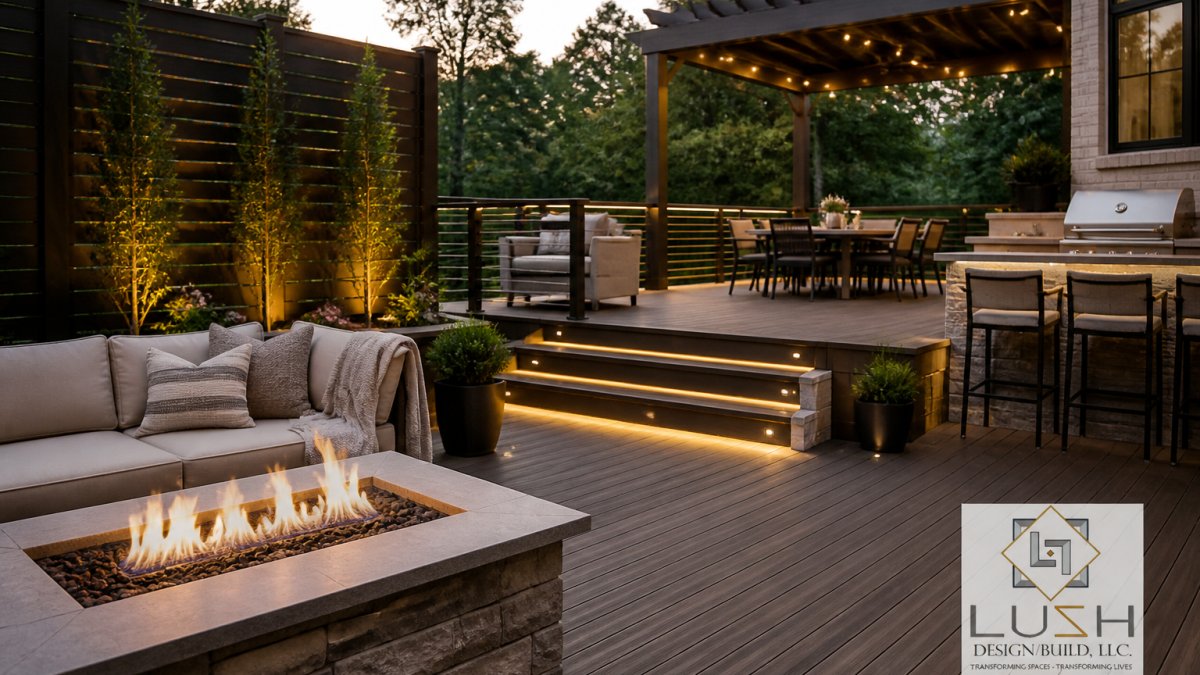
Layered lighting is the approach we favor: step lights for safety, low-level railing lights for wayfinding, and overhead fixtures for the covered zone. Integrated smart controls let homeowners dim the scene, set schedules, and tie the deck into the home's broader lighting system, which matters on any deck with level changes or stairs.
5. Built-In Entertainment, Seating, and Outdoor Amenities
Built-ins are where a luxury deck starts to feel like a destination. A sunken fire pit, an integrated outdoor kitchen, and comfortable seating arranged for conversation do more for daily use than any single finish. But built-ins are also where planning failures become expensive, because they tie structure, utilities, and code compliance together in one place.
Layout Comes Before Amenities
The layout question comes first. A deck size and shape that looks generous on paper can still feel awkward once furniture lands, so we plan seating zones, traffic paths, and hosting flow before finalizing dimensions. Map the primary circulation path from the door to the grill and seating before placing any built-in, because a fire pit or kitchen parked in the main traffic lane turns a gathering space into an obstacle course.
Fire Features and Outdoor Fireplaces
A fire feature is the amenity most likely to anchor a seating zone, but also the one most likely to run into code. Gas fire pits and outdoor fireplaces need a fuel source, clearances to combustibles, and ventilation, and requirements vary by municipality. A sunken fire pit changes the structural plan, it needs framing, drainage, and a safe seating edge, and should never sit where runoff collects.
Outdoor Kitchens and Integrated Utilities
An integrated outdoor kitchen is a construction project, not an appliance purchase. It needs a gas line or fuel plan, electrical service for lighting and refrigeration, weather-rated counter and cabinet materials, and a layout that keeps the cook within reach of the seating. Ventilation and clearance around a grill matter for safety and comfort. Because these utilities are buried in finished surfaces, the rough-in must be coordinated with the deck framing and the home's systems before the surface goes down.
Lighting, Audio, and Smart Controls
Lighting makes every other amenity usable after dark and belongs in the same planning conversation as the fire pit and kitchen. Layered lighting pairs naturally with connected controls that dim scenes, set schedules, and tie the deck into the home's broader lighting system. Audio and shading can share the same control platform, but each adds wiring that must be planned before surfaces close.
Safety, Accessibility, and Code-Sensitive Details
Amenities raise the safety stakes. A fire feature near a level change, a kitchen near a stair, or a seating zone on a raised deck all interact with guardrail requirements, stair geometry, and lighting. Accessibility deserves early attention too: step-free transitions, wider stairs, and thoughtful handrail placement are far easier to plan upfront than to retrofit. Because these details are governed by code and vary by municipality, we confirm requirements with the local building department before construction starts rather than discovering them at inspection.
Planning, Permits, and Choosing the Right Contractor
The features above only deliver if the build is planned properly. Decks and covered structures typically require permits, and requirements vary by municipality, so confirm the process with your local building department before construction starts.
Climate resilience deserves early attention too: drainage, footing depth, and material performance all need to suit the local freeze-thaw pattern. If you're weighing a deck against a larger addition, our custom home additions team can help you compare the options honestly.
When you interview contractors, ask how they handle permits, drainage, and structural detailing, and ask to see how their past work has held up over time. For a closer look at how we approach custom decks and patios, start there.
Conclusion
The gap between a good deck and a great one comes down to planning: sight lines, drainage, material performance, and features built around how you actually live. That's the work we do at Lush Design Build LLC, from custom-designed outdoor structures tailored to your home's architecture to premium materials and finishes chosen for the long haul. If you're ready to plan a deck that earns its place, get a project estimate and let's talk through the details.
Frequently Asked Questions
What features make a deck feel luxurious?
The features that make a deck feel luxurious are the ones that change how you use it, not just how it looks. Custom deck design ideas that connect the deck to the home's architecture, premium deck materials like cedar or Tigerwood, a covered deck with a cedar-planked ceiling, integrated recessed LED lighting, and comfortable built-in seating all raise the experience. The common thread is craftsmanship and thoughtful detailing: seamless indoor-outdoor transitions, hidden fasteners, and materials that hold up over time. A luxury deck feels like an extension of the house rather than an addition bolted onto the back.
Which decking materials are best for a high-end home?
For a high-end home, hardwood lumber such as cedar, redwood, mahogany, and Tigerwood delivers a natural texture and color that composite decking cannot fully replicate, and it takes stain and finish beautifully. Composite decking options have improved substantially and offer lower maintenance with consistent color and texture. Pressure-treated wood remains the budget-friendly choice but rarely suits a luxury build. The right pick depends on climate, sun exposure, and how much maintenance you are willing to take on. A design-build contractor can match the material to your home's architecture and your long-term plans.
Is a covered deck better than an open deck?
A covered deck extends usable time outdoors, protecting furniture and finishes from sun and rain and making the space comfortable in more seasons. Covered deck ideas range from a full roof structure to a pergola or pavilion that provides partial shade. An open deck offers unobstructed views and lower construction complexity. Many luxury homes combine both: a covered section for dining and lounging, plus an open area for sun and views. The decision should follow how you actually entertain and relax, not a generic preference.
How can lighting improve an outdoor deck?
Deck lighting ideas do more than extend evening hours. Recessed LED lighting in steps and railings improves safety, layered lighting defines zones for dining and conversation, and warm accent lights highlight materials and landscaping. Integrated smart controls let you set scenes and schedules from a phone. Good lighting also reduces glare and light pollution, which matters on a high-end property. Plan lighting during design, not after construction, so wiring and fixtures are built in cleanly rather than added on.
A high-end deck rewards patience at the planning stage. Reach out to Lush Design Build LLC for a project estimate, and we'll help you weigh materials, covered structures, lighting, and built-ins against your goals and your site.