 blog
Best Shade Solutions for Outdoor Kitchens That Last
Last Updated: November 5, 2026
Quick Summary
The best shade solutions for outdoor kitchens are permanent structures like pavilions and attached roof extensions for full weather protection, pergolas for filtered light, and retractable awnings, shade sails, screens, or cantilever umbrellas for flexible sun control. Plan shade as part of the structure, track sun direction, and keep at least one open face so smoke and heat can escape.
- A pergola is an open framework for partial shade; a pavilion is fully roofed for rain protection.
- Retractable awnings roll back for open sky and extend when afternoon sun turns brutal.
- Shade sails block UV but offer no rain protection and need sturdy tensioned anchors.
- Cantilever umbrellas reach over a grill without a center pole in the way.
- Attached roof extensions and pavilions typically require a building permit.
Table of Contents
- Why Outdoor Kitchen Shade Changes How You Cook and Entertain
- Pergolas and Pavilions: Fixed Overhead Coverage
- Outdoor Kitchen Awning Ideas for Flexible Sun and Rain Protection
- Covered Outdoor Kitchen Attached to House: Extending the Roofline
- Outdoor Kitchen Gazebo and Freestanding Structures
- Shade Sails, Screens, and Umbrellas: Side Protection From Low-Angle Sun
- Choosing the Right Outdoor Kitchen Cover by Climate, Budget, and Maintenance
- Plan Your Shaded Outdoor Kitchen With a Design-Build Estimate
- Frequently Asked Questions
Why Outdoor Kitchen Shade Changes How You Cook and Entertain
The best shade solutions for outdoor kitchens do more than block glare. They decide whether you can grill at noon in July, whether rain cancels dinner, and whether smoke drifts into your guests' faces. Shade is best planned as part of the structure, not as an afterthought bolted on later.
A covered cooking area changes how a space gets used. Shade lowers surface temperatures on stone counters and keeps cooks out of direct sun. It also protects finishes, from cabinet fronts to built-in appliances, from constant UV exposure.
Sun Direction, Heat, and Ventilation Around the Grill
Track the sun before you pick a cover. Morning sun hits from the east, afternoon sun from the west, and low winter angles reach deeper under any roof.
Ventilation matters just as much. A grill needs open air above and beside it. Trapping heat and smoke under a low ceiling makes cooking miserable.
Watch out: a cover that closes off the grill on three sides can trap smoke and heat, so plan at least one open face and a clear path for airflow. For a deeper look at airflow planning, see our guide on outdoor kitchen ventilation for covered patios.
Pergolas and Pavilions: Fixed Overhead Coverage
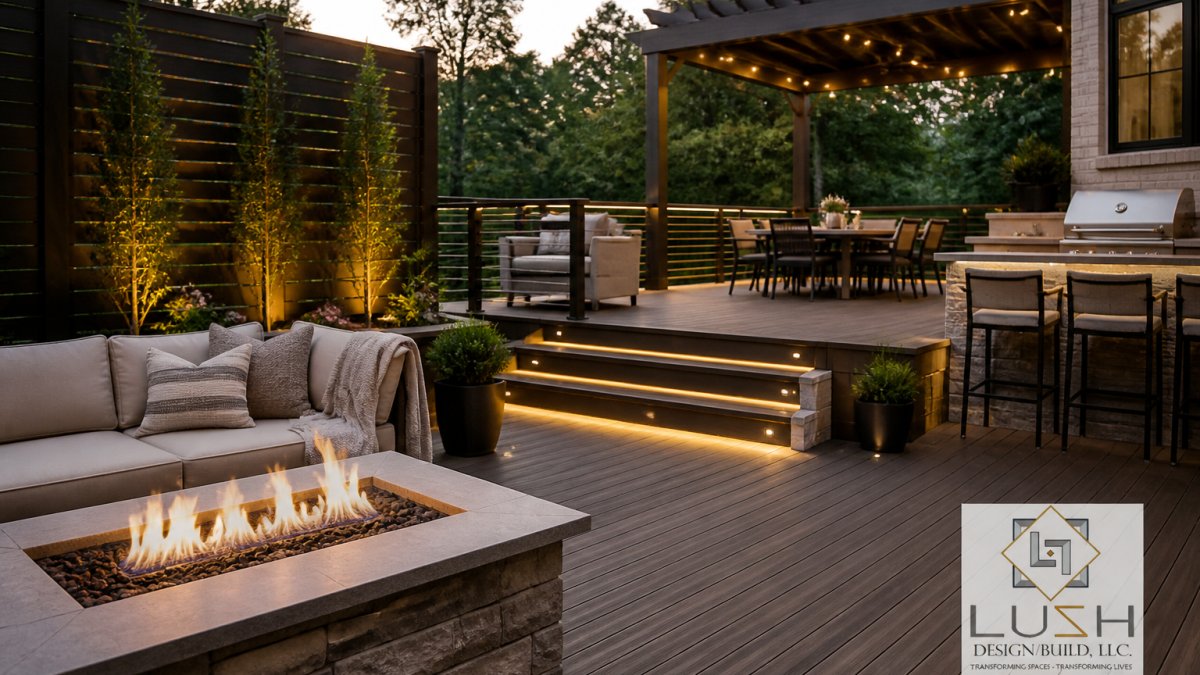
A pergola is an open framework of posts and beams that provides partial shade, while a pavilion is a fully roofed structure with solid overhead coverage. Both are permanent, and both add real architectural weight to a home.
Pergolas suit homeowners who want filtered light and a lighter visual footprint. Add climbing vines or a retractable canopy between the rafters to increase shade coverage.
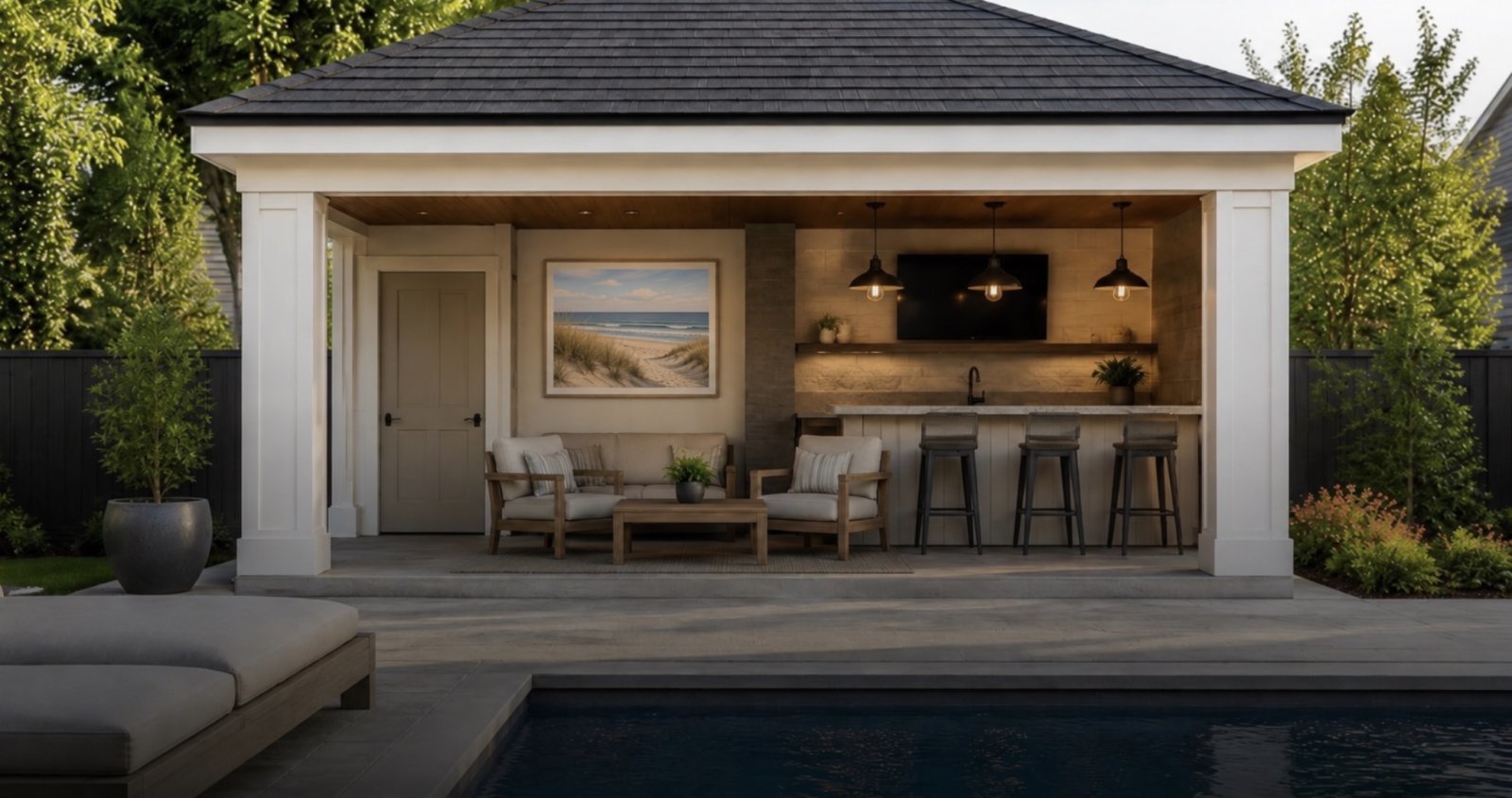
Pavilions give full rain protection and hold up to wind exposure better. They cost more to build and need a proper foundation. In practice, the choice comes down to how much weather protection you actually need.
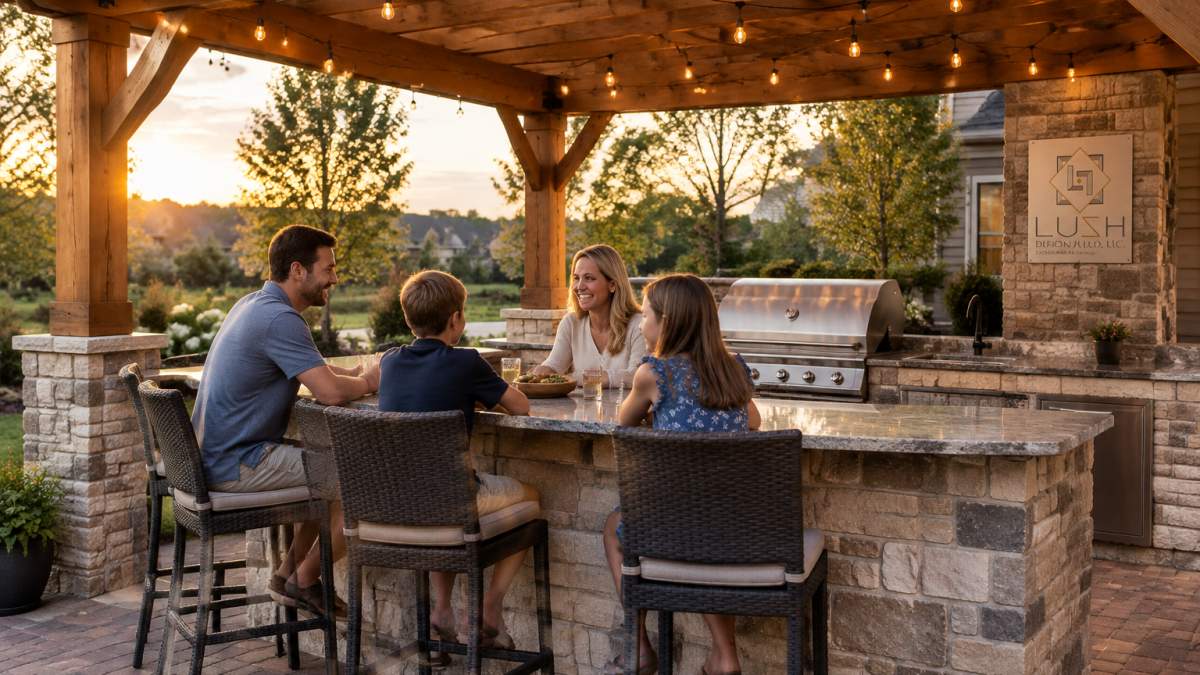
Best for: homeowners who want filtered light and a lighter look. Skip if: you need full rain protection year-round.
Outdoor Kitchen Awning Ideas for Flexible Sun and Rain Protection
An awning is a fabric or metal cover that extends from the house or a freestanding frame, and it gives you shade on demand. Retractable awnings roll back when you want open sky and extend when the afternoon sun turns brutal.
Good outdoor kitchen awning ideas start with material.
Fixed metal awnings last longer but offer no flexibility. Fabric awnings cost less upfront and need more maintenance over time.
Covered Outdoor Kitchen Attached to House: Extending the Roofline
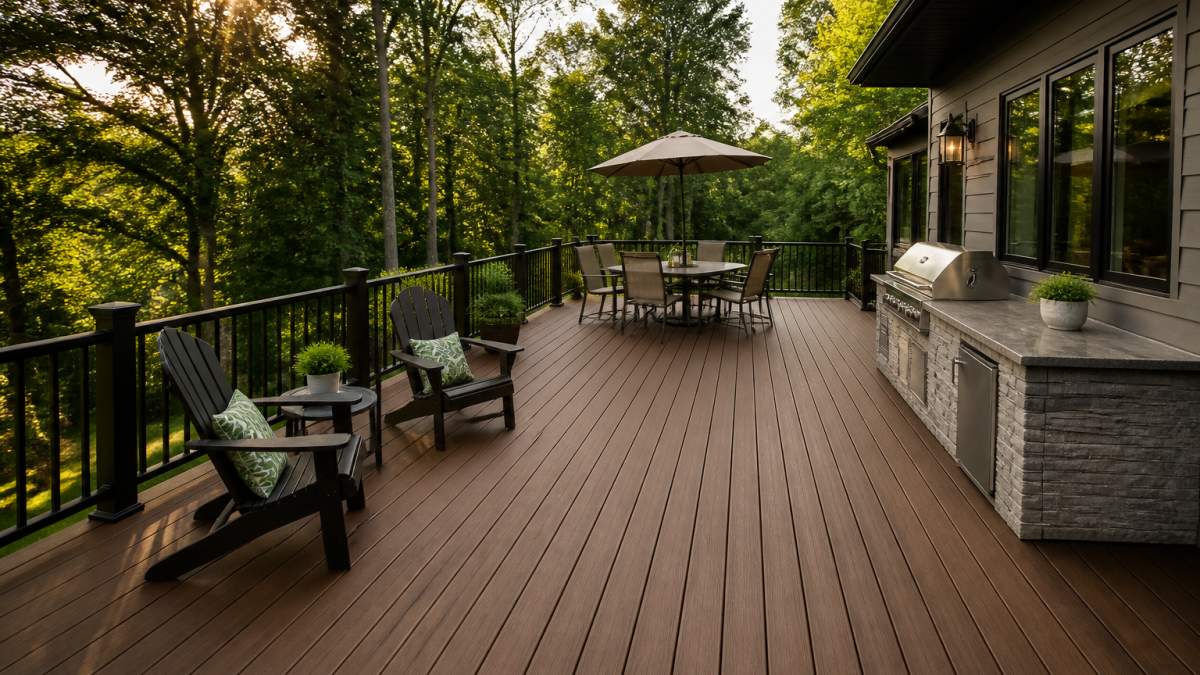
A covered outdoor kitchen attached to a house can extend the existing roof rather than adding a separate structure.
This approach solves several problems at once. It ties into the house's drainage, matches the shingles or standing seam, and creates a seamless transition from interior kitchen to patio.
Structural attachment is where these projects get tricky. The roof connection must be engineered and permitted, and the posts must bear on proper footings. This is not a weekend DIY job.
Outdoor Kitchen Gazebo and Freestanding Structures
An outdoor kitchen gazebo is a freestanding roofed structure, often octagonal or rectangular, that stands apart from the house. It works well when the cooking zone sits away from the home or when you want a distinct destination.
Freestanding structures offer design freedom. You can orient them to catch morning shade, screen a view, or anchor a pool house layout.
The trade-offs are real. Freestanding gazebos need their own footings, their own drainage plan, and often their own power run for lighting and appliances. Budget for those items early.
Shade Sails, Screens, and Umbrellas: Side Protection From Low-Angle Sun
Overhead coverage handles midday sun. Low-angle sun in early morning and late afternoon comes in sideways, and that is where side protection earns its keep. The angle of the sun changes by season as well: a roof that shades a grill at noon in June may leave it exposed at 4 p.m. in September. Plan side protection by tracking where the sun sits during the hours you actually cook.
Shade sails are tensioned fabric panels stretched between anchor points. They block UV and look contemporary, but they offer no rain protection and need sturdy anchors. A sail under tension transfers wind uplift to its anchors, so anchors must be rated for continuous load and checked for pull-out strength in decking, masonry, or posts. Sails can be angled to block low western sun without closing off the view. They require re-tensioning over time as fabric stretches.
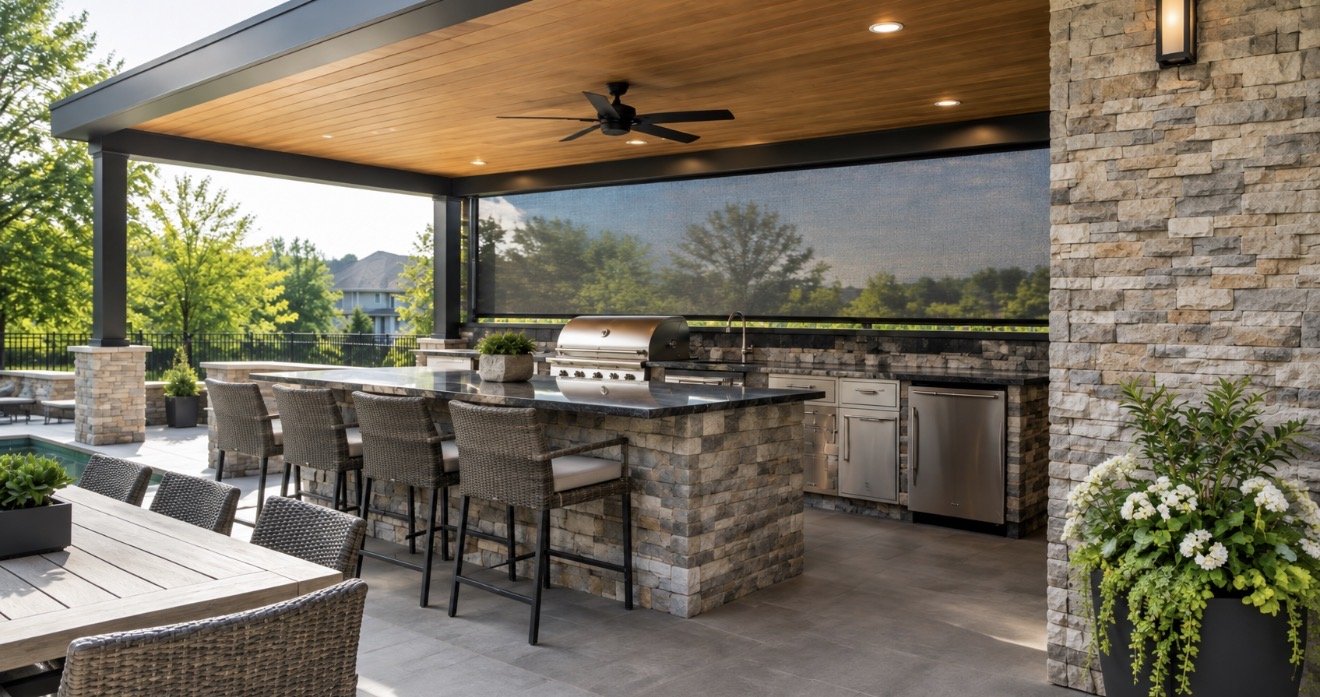
Solar screens and patio screens mount to posts or walls and cut glare and heat while keeping visibility. They are the best fix for west-facing cooking areas because they can be sized to the exact height where low sun enters. Screens reduce airflow somewhat, so leave a gap or use a breathable weave near the grill. They need occasional washing and re-screening if punctured.
Outdoor umbrellas are the cheapest, most flexible option. A cantilever umbrella reaches over a grill without a center pole in the way. They need weighted bases and come down in high wind. A common pattern is that umbrellas left up in gust fronts tip or become projectiles, so plan storage or a wind-rated base. Umbrellas offer partial side shade but little rain protection.
Watch out: side protection that closes off the grill on three sides can trap smoke and heat, so keep at least one open face and a clear path for airflow. For a deeper look at airflow planning, see our guide on outdoor kitchen ventilation for covered patios.
Choosing the Right Outdoor Kitchen Cover by Climate, Budget, and Maintenance
Match the cover to your climate first. In the Midwest, you need rain and snow load handled, not just sun. Wind exposure rules out lightweight options on open lots. A structure that performs in July may fail under a February snow load or a spring gust front, so the selection framework has to account for all four seasons.
Installation and permitting are part of the decision, not an afterthought. Attached roof extensions and pavilions typically require a building permit because they are structurally tied to the home or carry roof loads. Freestanding gazebos and pergolas often need footings inspected and may trigger permit review depending on height, attachment, and local rules. Retractable awnings usually need only a secure ledger attachment to framing, but wind-rated models may require engineered anchors. Shade sails and umbrellas are the least regulated, but sails need sturdy anchor points rated for tension and wind uplift. Permit and engineering time for attached structures can extend the schedule.
Anchoring and structural attachment separate durable covers from temporary ones. Attached roofs must tie into wall framing or a ledger engineered for the load. Freestanding structures need footings sized for frost depth and soil bearing. Pergola posts set on surface plates will heave and loosen; posts on proper footings stay plumb. Retractable awnings need a ledger bolted into studs or blocking, not siding. Shade sails need anchors that can take continuous tension without pulling out of decking or masonry.
Long-term ownership costs go beyond the purchase price. Fabric awnings and shade sails need cleaning, re-tensioning, and eventual fabric replacement. Motorized awnings need motor servicing and occasional sensor calibration. Screens need seasonal washing and re-screening if punctured. Metal and shingle roofs need little beyond inspection and gutter clearing. Umbrellas need weighted bases, fabric care, and storage or takedown in high wind. Budget for upkeep as a recurring line item, not a one-time purchase.
Cover Type | Coverage | Durability | Maintenance | Installation/Permitting | Best For |
|---|---|---|---|---|---|
Attached roof extension | Full | Highest | Low | Permit likely; engineered attachment | Seamless look, all-weather use |
Pavilion | Full | High | Low | Permit likely; footings inspected | Freestanding full protection |
Pergola | Partial | High | Medium | Permit may apply; footings required | Filtered light, architectural style |
Retractable awning | Adjustable | Medium | Medium | Ledger attachment; wind-rated anchors | Flexible sun and rain control |
Shade sail | Partial | Medium | Low | Tensioned anchors; no rain protection | Side and overhead sun blocking |
Umbrella | Partial | Low | High | Weighted base; store in wind | Budget, movable shade |
For a realistic look at what a full cooking area involves, our outdoor kitchen pricing guide walks through the components before you commit to a structure.
Plan Your Shaded Outdoor Kitchen With a Design-Build Estimate
Shade is a structural decision, and it deserves a structural plan. Get it wrong and you end up with a beautiful space nobody uses at 2 p.m. in August.
Our team designs and builds pergolas and pavilions and full outdoor kitchens as one coordinated project, with attention to structure and how the space will be used. When you are ready to move from planning to building, you can request a design-build estimate.
Frequently Asked Questions
What can I put over my outdoor kitchen for shade?
The main options are a pergola, a pavilion or gazebo, a retractable awning, a shade sail, or an extension of the house roofline. Each trades off cost, permanence, and wind resistance differently. A fixed structure like a pavilion gives the most reliable rain protection, while a retractable awning or sail offers flexible outdoor kitchen shade at a lower commitment. Your choice should follow how often you cook, how exposed the site is to wind, and whether you want year-round use.
Are pergolas effective for shading an outdoor kitchen?
A pergola blocks direct overhead sun but lets filtered light through open slats, so it shades the cooking zone without making the space feel closed in. For stronger protection, add a retractable canopy, fixed roof panels, or climbing vines. Keep the grill area open on at least one side so heat and smoke vent instead of collecting under the beams. A design-build contractor can size the span and footing so the structure handles wind and snow loads safely.
How do you protect an outdoor kitchen from sun and rain?
Combine overhead coverage with side protection. A solid roof or retractable canopy handles rain, while solar screens or roll-down shades cut low-angle sun in the morning and late afternoon. Choose weather-rated materials for counters and cabinetry, and confirm the cover directs water away from the cooking area rather than pooling on it. Ventilation matters too: leave clearance above the grill so smoke and heat escape instead of staining the underside of the roof.
How much clearance does an outdoor kitchen cover need?
Clearance depends on the grill manufacturer's instructions and local building codes, so check both before finalizing a design. As a planning principle, leave generous open space above and around the cooking appliance so heat and smoke vent freely, and keep combustible materials away from the grill. A qualified contractor will confirm the required clearances, ventilation, and permit requirements for your specific equipment and structure during design.
Your outdoor kitchen should be usable on the hottest afternoon and the rainiest evening, not just on perfect days. Lush Design Build LLC brings design, engineering, and construction under one roof, with custom structures tailored to your home's architecture, durable premium materials, and lighting that extends the space into the evening. Get started with Lush Design Build LLC and build a shaded outdoor kitchen you will actually use.