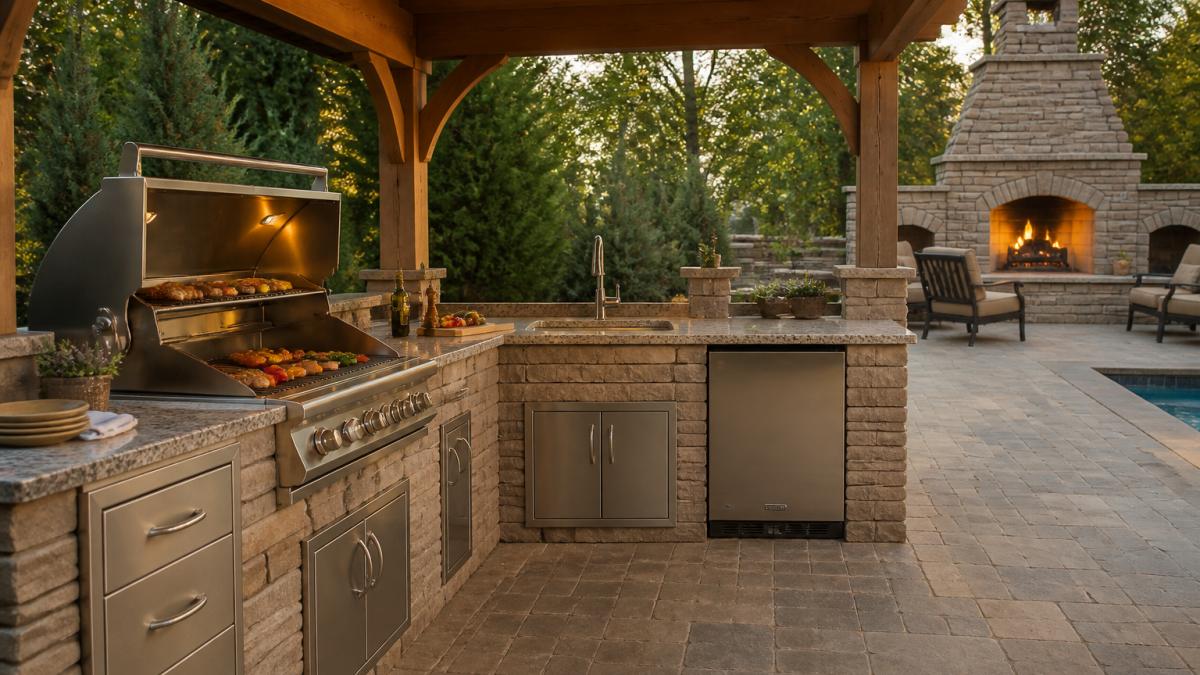
 ultimate-guide
Does an Outdoor Kitchen Add Home Value? 2026 Guide
Table of Contents
- Does an Outdoor Kitchen Add Home Value? The Short Answer
- Outdoor Kitchen ROI: What the Numbers Actually Show
- The Cost of Building an Outdoor Kitchen and How It Shapes Your Return
- Best Outdoor Kitchen Features for Resale Value
- How Appraisers Actually Value an Outdoor Kitchen
- Over-Improvement Risks: When an Outdoor Kitchen Hurts Your Sale
- Permits, Maintenance Costs, and Long-Term Value
- Conclusion: Making an Outdoor Kitchen Pay Off
- Frequently Asked Questions
Last Updated: October 4, 2026
Does an Outdoor Kitchen Add Home Value? The Short Answer
Yes, the question of does an outdoor kitchen add home value has a qualified answer, since the return depends heavily on design, materials, and how well the space fits your property. Custom outdoor living projects can become genuine value-add improvements when they match the home's architecture and the expectations of local buyers.
An outdoor kitchen is a permanent outdoor cooking and dining structure that typically includes a built-in grill, counter space, storage, and sometimes a sink or refrigerator. Unlike a portable grill on a patio, it is a fixed improvement that becomes part of the property.
Most homeowners approach this project expecting a simple yes or no answer. The reality is more nuanced. Below, we break down what actually drives return on investment, which features buyers pay attention to, and where homeowners overspend.
Outdoor Kitchen ROI: What the Numbers Actually Show
The outdoor kitchen ROI conversation usually starts with a single question: do you get your money back? The honest answer is that cost recovery varies widely, and national averages rarely reflect what happens in a specific neighborhood.
A common approach in real estate is to compare the project cost against the appraised value increase. Many homeowners find that a well-designed outdoor kitchen recovers a meaningful portion of its cost, but rarely the full amount.
Cost Recovery vs. Lifestyle Return
Two kinds of return matter here. Financial cost recovery shows up at sale. Lifestyle return shows up every weekend you use the space.
- Cost recovery: depends on your local real estate market, buyer expectations, and how the kitchen compares to neighboring homes.
- Lifestyle return: the daily use, entertaining value, and extended living space you gain while you own the home.
The mistake many homeowners make is optimizing only for resale and ending up with a space they never use. A kitchen that functions well for how you actually cook and entertain tends to hold its appeal, which also supports resale.
The Cost of Building an Outdoor Kitchen and How It Shapes Your Return
The cost of building an outdoor kitchen ranges from a modest grill station to a fully equipped outdoor cooking station with premium appliances, and that scope directly determines your potential return. Pricing depends on size, materials, utilities, and site conditions, so we always recommend a project estimate rather than a ballpark guess.
Higher-cost builds are not automatically better investments. The most common mistake is spending on features that do not match the home or the neighborhood.
Why Scope Creep Kills ROI
Scope creep is the quiet killer of outdoor kitchen returns. It starts with a simple grill station and ends with a full bar, pizza oven, and refrigerator that push the project far beyond what the property can support at resale.
A disciplined approach keeps the build aligned with the home's value tier. If you want to phase the project, starting with the core cooking station and adding amenities later is often recommended.
Best Outdoor Kitchen Features for Resale Value
The best outdoor kitchen features for resale are the ones buyers can see, understand, and imagine using: a built-in grill, durable countertops, and a logical layout.
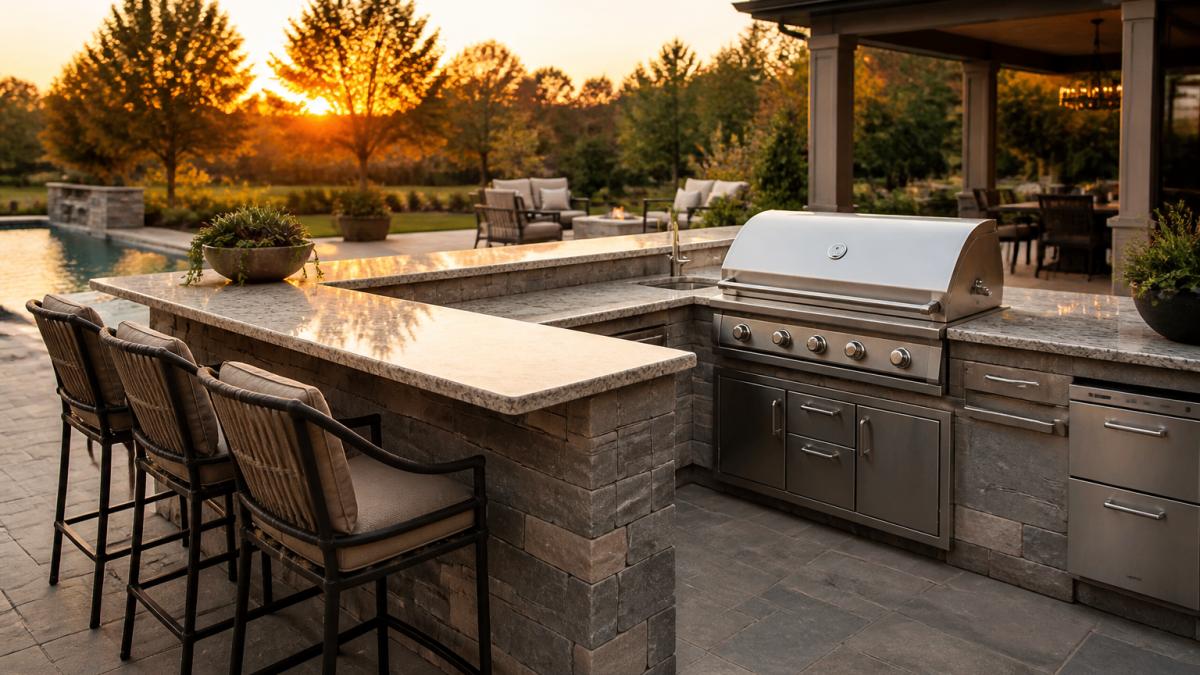
Features That Appraisers and Buyers Notice
Certain features consistently carry more weight than others. Here is how features are often prioritized when designing for both lifestyle and resale.
| Feature | Why It Matters | Resale Impact |
|---|---|---|
| Built-in grill and cooking station | Core function buyers expect | High |
| Weather-resistant materials | Durability and low maintenance | High |
| Counter and prep space | Usability for entertaining | Medium-high |
| Bar or dining seating | Extends outdoor entertainment | Medium |
| Sink and refrigeration | Convenience, adds cost | Medium |
| Specialty items like pizza ovens | Personal preference | Low to medium |
The pattern is clear: buyers reward function and durability. Highly personalized features may delight you but do not always translate into appraised value.
How Appraisers Actually Value an Outdoor Kitchen
Most articles on this topic never explain the mechanism, so here it is: an appraiser does not assign a dollar figure to your outdoor kitchen. They assign a contributory value, the amount a typical buyer in your market would pay for the feature as part of the whole property. That number is derived from the sales comparison approach, not from your receipts.
Why Your Receipt Is Not the Appraised Value
An appraiser's job is to estimate market value, not to reimburse your cost. If you spent $60,000 on a kitchen and comparable homes with similar outdoor kitchens sold for $25,000 more than homes without one, the contributory value is closer to $25,000, regardless of what you paid. Cost and value are two different numbers, and conflating them is the most common homeowner error.
The Mechanics: Comparable Sales and Adjustments
Here is how the process actually works in practice:
- Select comparables. The appraiser pulls recent closed sales of homes similar to yours in size, age, condition, and location.
- Identify the feature. They note whether each comparable has a built-in outdoor kitchen, a portable grill setup, or nothing.
- Apply an adjustment. If your home has the kitchen and a comparable does not, the appraiser adds a market-derived adjustment to that comparable's sale price. If the comparable has one and yours does not, they subtract.
- Reconcile. The final opinion of value weights the adjusted comparables, not your construction invoice.
The size of that adjustment is set by what local paired sales show, homes that sold with and without the feature. In markets where outdoor living is standard, the adjustment is small because buyers already expect it. In markets where it is rare, the adjustment can be larger, but only if buyers demonstrably pay for it.
What Appraisers Do Not Count
Two things routinely surprise homeowners:
- Gross living area. An outdoor kitchen is not included in the home's finished square footage on a standard appraisal form. It is treated as an amenity, like a deck or a pool, not as living space.
- Personal property. A freestanding grill, a portable pizza oven, or movable furniture is personal property and contributes nothing to the real estate value. Only permanently affixed improvements count.
What Actually Moves the Appraisal
Appraisers reward permanence, condition, and market acceptance. A built-in masonry or steel-framed structure with utilities, weather-rated materials, and a logical layout reads as a permanent improvement. A grill on a cart does not. Condition matters too: a kitchen with cracked counters, rusted burners, or failed sealant is adjusted downward, not upward.
The Practical Takeaway
If you want the appraisal to reflect your investment, build something a typical buyer in your price band would recognize and want, and be able to prove it was done properly. That is the entire game.
Over-Improvement Risks: When an Outdoor Kitchen Hurts Your Sale
An outdoor kitchen can hurt your sale when it exceeds what the neighborhood supports. This is the over-improvement risk, and it is the angle most guides skip entirely. The concept is simple: every neighborhood has a practical price ceiling, and improvements that push a home past that ceiling do not return their cost.
What the Neighborhood Ceiling Actually Means
The ceiling is not a hard number, it is the top of the range where buyers in your area are willing to shop.
A useful rule of thumb many real estate professionals apply: keep the total of your home plus improvement within roughly 10 to 15 percent of the top of your neighborhood's recent sale range. Beyond that, you are competing against homes in a tier your property does not belong to.
How Over-Improvement Shows Up at Sale
Over-improvement rarely announces itself. It shows up in three ways:
- Extended days on market. Buyers tour, admire the kitchen, and buy a comparable home without it for less money.
- Low appraisals. The appraiser cannot find comparable sales that support your asking price, so the loan amount falls short and the deal collapses.
- Price reductions. You eventually cut the price to the neighborhood ceiling, effectively donating the kitchen to the buyer.
The Buyer-Expectation Mismatch
A high-end kitchen in a modest neighborhood creates a mismatch. Buyers shopping in that price band are usually prioritizing square footage, school district, or lot size, not a pizza oven and a kegerator. Meanwhile, buyers who want a luxury outdoor kitchen are shopping in neighborhoods where those features are already common, and they expect them as standard rather than as a premium.
How to Protect Your Return
The fix is fit, not frugality. Three practical guardrails:
- Match your home's value tier. A well-built grill station with durable counters and good lighting fits almost any mid-range home. A full bar, fireplace, and pergola may not.
- Phase the build. Start with the core cooking station and add amenities over time. You spread the cost, learn how you actually use the space, and avoid over-committing before you know your market.
- Check the comps first. Before you sign a contract, ask a local real estate agent to pull recent sales of homes with and without outdoor kitchens in your immediate area. That paired data tells you more than any national average.
The Counterintuitive Point
In some markets, a modest, well-executed outdoor kitchen outperforms a luxury one on return, because it appeals to a broader pool of buyers without pushing the home past its ceiling. Fit beats features every time.
Permits, Maintenance Costs, and Long-Term Value
Permits and ongoing maintenance are two overlooked factors that shape long-term value. Many homeowners focus on the build cost and forget that an outdoor kitchen is a permanent structure with compliance and upkeep requirements.
Permitting rules vary by jurisdiction, and requirements for gas, electrical, and structural work are set locally. It is always important to confirm what your project needs before construction begins, because unpermitted work can complicate a future sale and an appraisal.
Maintenance cost impact on long-term ROI is real. Weather-resistant materials and proper drainage reduce repair bills, while neglected structures lose both function and appraised value. A simple seasonal maintenance routine protects the investment:
- Inspect countertops and sealant for cracks
- Clean and cover the grill and burners
- Check gas and electrical connections
Conclusion: Making an Outdoor Kitchen Pay Off
The honest answer to whether an outdoor kitchen adds home value is that it can, when the design fits the home, the neighborhood, and how you live. Get a project estimate and build an outdoor space that earns its place.
The challenge with any outdoor kitchen is getting the scope right, and that is where most projects go wrong.
Frequently Asked Questions
Is an outdoor kitchen a good investment?
It depends on your market, your home's price point, and how the project is built. An outdoor kitchen can return a meaningful portion of its cost at resale, but the return rarely matches a well-executed indoor remodel. Homes in competitive markets with strong demand for outdoor living space tend to recover more. The biggest factor is whether the kitchen fits the home's overall value: a $60,000 build on a $300,000 house usually won't return as well as the same build on a $900,000 home.
What are the disadvantages of an outdoor kitchen?
The main drawbacks are maintenance, weather exposure, and limited buyer pool. A built-in kitchen needs seasonal cleaning, cover care, and occasional repair of grills, burners, and finishes. In colder markets, water lines must be winterized. Some buyers see an outdoor kitchen as extra upkeep rather than a perk, especially if the design feels dated or overly personal. Permitting issues and HOA restrictions can also complicate a sale if the structure wasn't properly approved.
How much does an outdoor kitchen increase home value?
There's no single figure. Appraisers value an outdoor kitchen as part of the overall property, often comparing it to similar homes with outdoor amenities. Cost recovery generally falls below what a kitchen or bathroom remodel returns, but the lifestyle benefit and faster sale potential add value that doesn't show up in a dollar figure. A well-built, appropriately scaled outdoor kitchen in a market that values outdoor living tends to perform best.
Do outdoor kitchens provide a better ROI than indoor kitchen remodels?
Usually not. Indoor kitchen remodels consistently rank among the highest-return home improvement projects because every buyer uses a kitchen. An outdoor kitchen serves a smaller pool of buyers, so its cost recovery tends to be lower. That doesn't mean it's a bad project: if you'll use the space for years and your home is in a market where outdoor living is in demand, the combined lifestyle and resale value can justify the investment.