 how-to
Does a Custom Patio Add Home Value? A 2026 Guide
Table of Contents
- Does a Custom Patio Add Home Value? What Buyers Actually Pay For
- Paver Patio ROI: Realistic Ranges and the Math Behind Them
- Custom Patio Cost: What Drives Your Project Budget
- Backyard Improvements That Add Value Beyond the Patio
- Patio Design Ideas That Hold Up at Resale
- Permits, Drainage, and Code: The Value Risks Nobody Mentions
- When a Custom Patio Does Not Add Value
- Conclusion: Deciding Whether to Build
- Frequently Asked Questions
Last Updated: October 7, 2026
Does a Custom Patio Add Home Value? What Buyers Actually Pay For
Yes, a custom patio can add home value, but the boost depends on how well the space fits the house, the lot, and local buyers.
Here is the honest version most guides skip. Appraisers rarely give a patio its full cost back. Buyers, though, vote with their feet. A functional outdoor room gives a home a reason to be remembered after a long day of showings.
What Appraisers and Agents Count as Value
Appraised value is the number a lender will accept, and it comes from comparable sales, not what you spent.
Appraisers adjust nearby recent sales for size, condition, and features.
Real estate agents track what makes a listing get offers. A patio that photographs and shows well becomes a selling point in the listing description, that is where your money comes back, not in the appraisal grid.
What a Custom Patio Adds That a Builder-Grade Slab Does Not
A builder-grade concrete slab is a floor. A custom patio is a room.
That difference shows up in three places: usability (built-in seating, defined zones, and shade make the space get used), finish (cut stone, pavers, and clean edges read as quality in photos), and fit (a patio shaped to your lot handles awkward corners and slopes a stock slab cannot).
Buyers pay for spaces they can picture themselves using. A plain slab says "backyard." A designed patio says "Friday night."
Paver Patio ROI: Realistic Ranges and the Math Behind Them
Paver patio ROI is the share of your project cost you recover at resale. For most homes it lands between a partial recovery and a modest gain, not a full payback, depending on your market, neighborhood, and design fit.
Outdoor hardscape rarely returns dollar for dollar the way a kitchen or bathroom refresh sometimes can. What a well-built patio does reliably is shorten time on market and strengthen offers, because a finished outdoor room gives buyers a reason to remember yours.
Why Patio ROI Is Not a Single Number
Most articles quote one ROI figure for "patios" as if every project were the same. A paver patio's payback actually moves with several variables:
- Local market temperature. In a seller's market with low inventory, buyers compete and outdoor features get bid up. In a buyer's market, the same patio may only help your home sell at all, not sell higher.
- Neighborhood ceiling. If comparable homes nearby already have patios, yours is table stakes, not a differentiator. If you are the first on the block, you may be over-improving.
- Design fit. A patio that matches the home's architecture and lot reads as original. One that fights the house reads as a project the next owner inherits.
A Practical ROI Methodology You Can Run Yourself
You can put a rough number on your project before you sign anything, using the same sequence appraisers and agents use informally:
- Pull three to five recent sales of similar homes in your neighborhood, same bed/bath count, similar square footage, similar lot size.
- Sort them by outdoor space. Note which had a patio, deck, or defined outdoor living area and which did not.
- Compare sale prices per square foot, not raw prices, so you are comparing like homes.
- Isolate the outdoor premium. The difference between the two groups signals what buyers pay for outdoor space. It is not pure patio value, landscaping, lot, and condition contribute, so treat it as a ceiling, not a floor.
- Subtract your estimated project cost from that premium for your rough net position.
- Adjust down for over-improvement. If your planned patio is fancier than anything nearby, discount the premium further.
If the gap is thin, scale the design back. If the gap is strong, you have room to add features.
What Moves the Number Up or Down
Levers that push patio ROI higher:
- Permanent, permitted construction. Appraisers can only credit what is legally part of the property. An unpermitted structure is a liability, not an asset.
- Functional zones. A patio with defined seating, dining, and shade areas reads as a room. A bare slab reads as a slab.
- Low maintenance. Pavers, stone, and porcelain outlast wood decks in most climates and cost less to keep up.
Levers that push it lower:
- Overbuilding for the lot. A large patio on a small yard eats usable lawn and can make the space feel cramped.
- High-maintenance features. Water features, complex plantings, and delicate materials add upkeep the next owner may not want.
- Poor drainage or grading. Water problems show up in inspections and become price cuts.
How Local Market Conditions Change the Equation
ROI is not portable. A paver patio that returns well in a warm climate may return less where the yard is usable four months a year. Buyers in dense, high-cost neighborhoods often pay a premium for usable outdoor space, while buyers where large yards are standard may treat a patio as expected rather than special.
The practical move is to look at what similar homes in your immediate area actually sold for and what they had. That local evidence beats any national average.
Custom Patio Cost: What Drives Your Project Budget
Custom patio cost is set by four things: materials, size, site conditions, and features. Two patios of the same square footage can land far apart once you account for grading, access, and finish level.
Understand the cost structure so you can sanity-check any estimate.
How Materials Change the Number
Materials set the floor of your budget. From least to most expensive, the common options are:
- Poured concrete. The lowest upfront cost and fastest install. Plain slabs read as builder-grade and crack over time in freeze-thaw climates.
- Stamped or decorative concrete. Mimics stone or pavers at a lower cost, but the pattern can look uniform and the surface can fade.
- Concrete pavers. The middle of the market and the most common choice for custom patios. Modular, repairable, and available in a wide range of colors and textures; individual units can be lifted and reset if the base shifts.
Each step up adds durability and visual weight. The right choice depends on your climate, home style, and how long you plan to stay.
How Size Scales the Cost
Size scales cost almost linearly for the base patio, but not perfectly. A larger patio needs more base prep, edge restraint, and material, so per-square-foot cost stays fairly flat until you add features.
Homeowners often underestimate the cost of the first ten feet of patio and overestimate the last ten. The base, edge, and connection to the house are fixed costs that do not shrink with a smaller patio.
How Site Conditions Add Hidden Cost
Site conditions are where budgets surprise people. Watch for:
- Slope. A sloped yard needs grading and retaining walls to create a level patio. Retaining can add significant cost depending on height and length.
- Drainage. Poor drainage must be corrected before any hardscape goes down. French drains, dry wells, and regrading are common line items.
- Access. Tight access for equipment slows the build and adds labor. If a machine cannot reach the site, material moves by hand.
How Features Add Cost and Value Together
Features do not scale linearly. Each one adds its own line item:
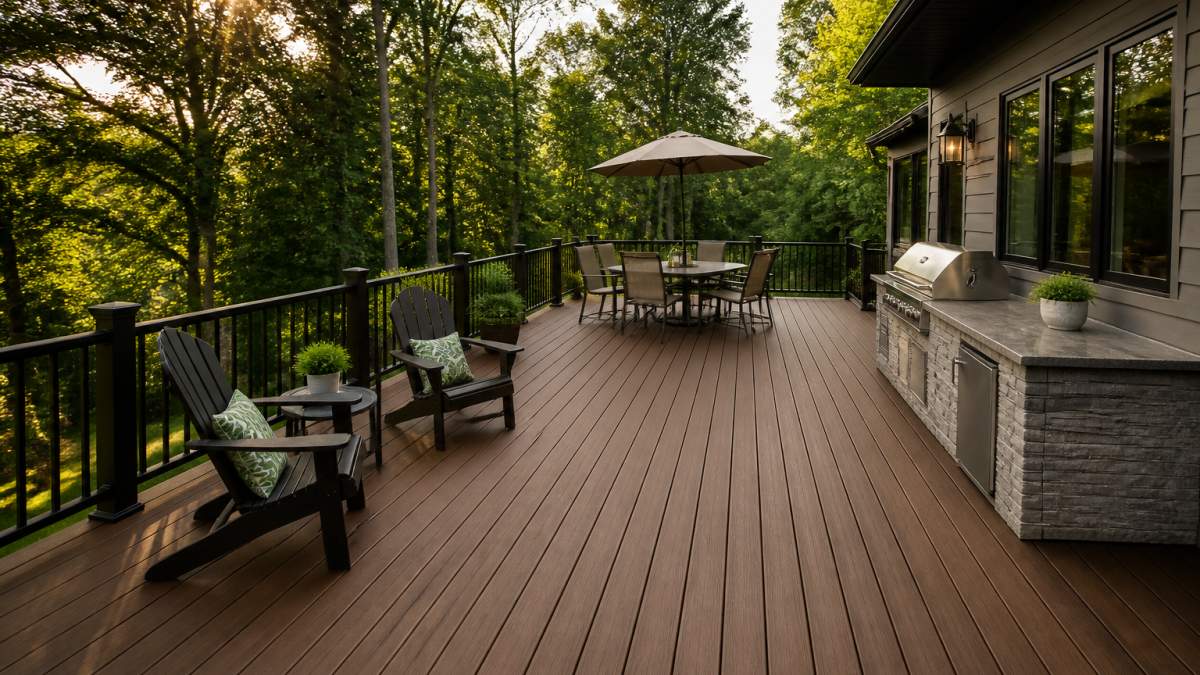
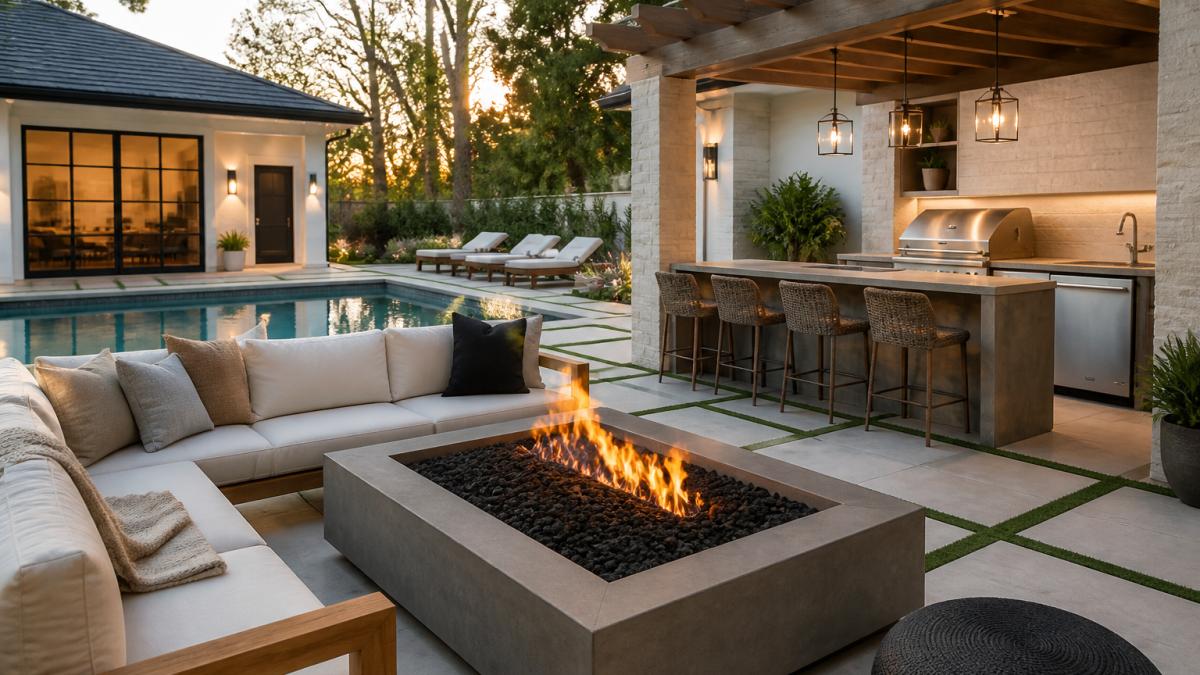
- Fire pit or fire feature. A popular anchor that extends the usable season. Cost depends on whether it is wood-burning, gas, or built-in.
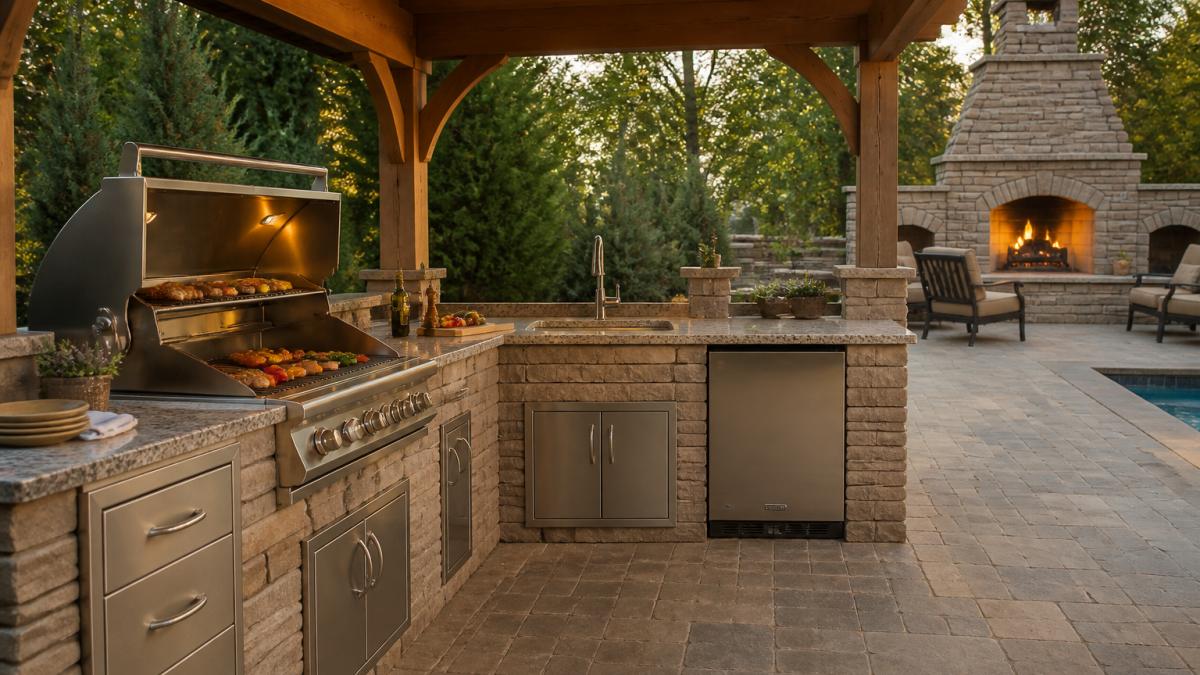
- Outdoor kitchen. The highest-cost feature. Requires gas, electrical, and often a structure for weather protection.
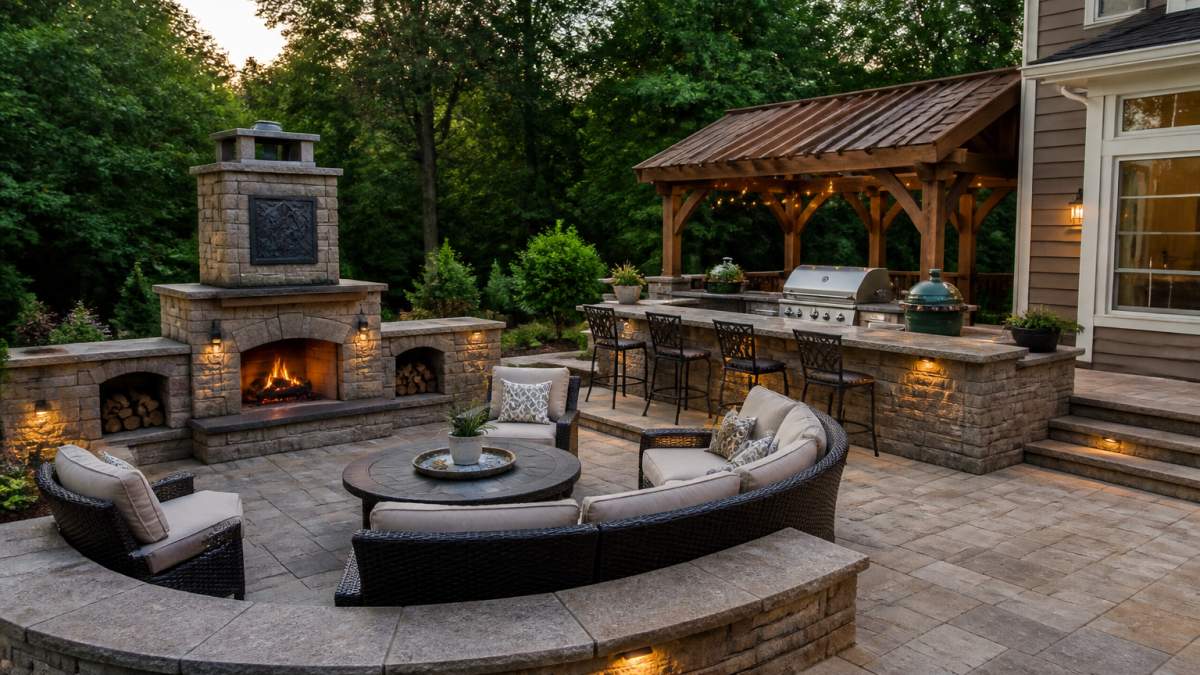
- Built-in seating. Adds cost but also adds usable capacity and storage.
| Cost Driver | What Changes It | Why It Matters |
|---|---|---|
| Material | Concrete, pavers, natural stone, porcelain | Sets base cost and lifespan |
| Size | Square footage | Scales cost up or down |
| Site conditions | Slope, drainage, access, soil | Adds hidden labor and prep |
| Features | Fire pit, kitchen, seating, shade | Adds value and cost together |
Getting a Real Number for Your Project
Because pricing depends on your site, dates, and material choices, no article can quote your number. Request written estimates from two or three contractors and compare them line by line.
At Lush Design Build LLC, we give every project a written estimate after a site visit so you can see exactly what drives your number. You can request one through Lush Design Build LLC.
Backyard Improvements That Add Value Beyond the Patio
Backyard improvements that add value work best as a set. A patio alone helps; a patio with lighting, planting, and a defined path helps more.
Think about the buyer walking the yard. They want to see a finished space, not a project. Pair your patio with:
- Landscape beds that frame the edges
- Low-voltage lighting for evening showings
- A path that connects the patio to the house
Curb appeal still matters most at the front of the house. But a strong backyard now carries real weight, because buyers spend more time imagining how they would live there.
Patio Design Ideas That Hold Up at Resale
Patio design ideas that hold up at resale share one trait: they stay neutral enough to suit the next owner. Bold personal choices date fast; timeless layouts keep their appeal.
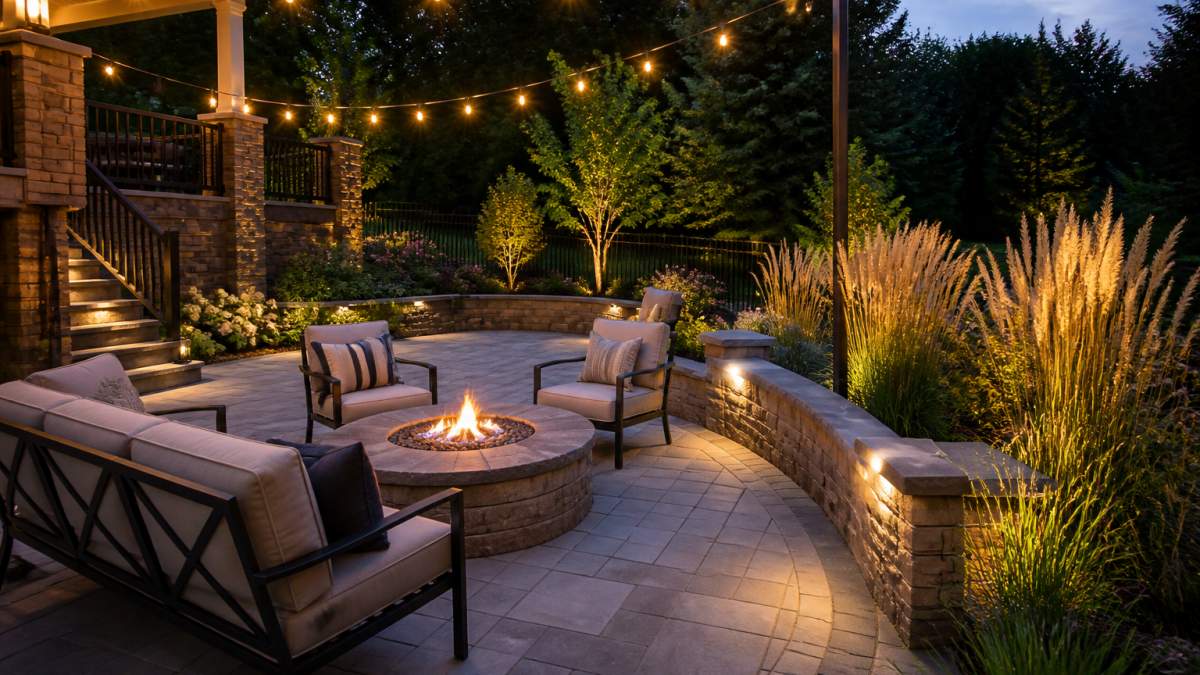
Design choices that tend to age well:
- Simple, geometric layouts that match the home's lines
- Earth-tone pavers that hide dirt and wear
- Built-in seating that doubles as storage
What most guides miss is restraint. The patios that sell homes are the ones a buyer can imagine furnishing, not the ones that look like a showroom.
Permits, Drainage, and Code: The Value Risks Nobody Mentions
Permits, drainage, and code compliance protect your value, and skipping them can cost you at closing.
A patio that moves water toward the house is a liability, not an asset. Poor drainage can damage a foundation and show up in a home inspection.
Before you build, confirm:
- Whether your project needs a permit from your local building authority
- How the site will drain after the hardscape goes in
- Whether grading rules or easements affect your lot
Check your local building department for the rules that apply to your lot. Requirements vary by city and county.
When a Custom Patio Does Not Add Value
A custom patio does not add value when it outpaces the neighborhood, when the site fights the design, or when the space never gets used. Spend on a patio and you can lose money in a few common cases.
Watch for these signals:
- Your home is already the most expensive on the block
- The yard is too small for the patio you want
- The design is so personal that few buyers would want it
If any of these fit, a smaller, smarter build beats a bigger one. Value comes from fit, not from square footage.
Conclusion: Deciding Whether to Build
The real question is not whether a custom patio adds value, but whether the right patio adds value for your home, your lot, and your buyers.
That is where Lush Design Build LLC comes in. We design outdoor living spaces tailored to your home's architecture, handle the full process from concept to installation, and build with premium materials meant to last.
Get started with Lush Design Build LLC and build an outdoor space that earns its keep. Request your project estimate today.
Frequently Asked Questions
How much does an outdoor patio add to home value?
It depends on your market, but a well-built custom patio often returns a meaningful share of its cost at resale. Instead of a fixed percentage, estimate value by adding the cost of the patio to your home's current value, then adjusting for how much buyers in your neighborhood pay for comparable outdoor living space. A real estate agent who knows your area can give you a realistic range.
What is the ROI on a paver patio?
Paver patio ROI varies with material, size, and neighborhood. High-quality pavers with good drainage and a functional layout tend to hold value better than basic slabs because they look better and last longer. To estimate yours, compare the project cost against recent sale prices of homes nearby with similar patios. If your home is already the most expensive on the block, expect a lower return.
Can an expensive patio hurt a home's resale value?
Yes, if the patio costs far more than buyers in your area expect to pay for outdoor space. Over-improving for your neighborhood means you may not recoup the cost. Features that rarely pay back include highly personalized elements like custom water features or elaborate outdoor kitchens that exceed local norms. Keep the design aligned with the homes around you.
Which patio features make an outdoor space more usable?
Buyers respond to patios that work in different weather and times of day. Shade structures, built-in seating, and a fire pit extend the season. Good lighting makes the space usable after dark. Proper drainage and grading keep it dry. A layout that connects naturally to the house and yard gets used more, and that usability is what shows up in resale value.