 how-to
How to Handle Backyard Drainage Issues: 7 Fixes
Table of Contents
- Diagnose the Source of Your Backyard Drainage Problems
- Yard Grading for Drainage: Fixing Low Spots and Slope
- Downspout Drainage Solutions That Move Water Away From the House
- How to Fix a Waterlogged Yard With Soil and Lawn Changes
- French Drain Installation: When a Buried Drain Earns Its Keep
- Swales, Dry Creek Beds, and Rain Gardens: Surface Drainage That Looks Intentional
- Permits, Property Lines, and Utility Checks Before You Dig
- Conclusion
- Frequently Asked Questions
Last Updated: October 19, 2026
Diagnose the Source of Your Backyard Drainage Problems
Backyard drainage problems almost always trace back to one of four sources: water running toward the house, soil that will not absorb rain, a blocked or buried outlet, or a low spot with nowhere to go.
This guide from Lush Design Build LLC walks you through diagnosing the cause, then matching it to the right repair.
Most guides start with the fix. A French drain in the wrong spot just moves the puddle three feet. Diagnose first, then dig.
Walk the Yard After a Heavy Rain
Walk the property while it is still raining or right after. Watch where water enters, where it slows, and where it sits.
Note these details:
- Water flowing toward the foundation
- Low spots holding standing water
- Gutters dumping at the base of the wall
Take photos. A dry-yard walk tells you almost nothing.
Match the Source to the Right Fix
Once you know where the water comes from, the fix usually picks itself.
| What You See | Likely Cause | First Fix to Try |
|---|---|---|
| Water against the foundation | Grading slopes toward house | Regrade the slope |
| Puddles far from the house | Low spot with no outlet | Swale or dry well |
| Waterlogged soil that never dries | Compacted or clay-heavy soil | Aeration and soil amendment |
| Gutters overflowing at the base | Downspouts too short | Extend downspouts |
| Water crossing the whole yard | Upstream runoff | French drain or channel drain |
Yard Grading for Drainage: Fixing Low Spots and Slope
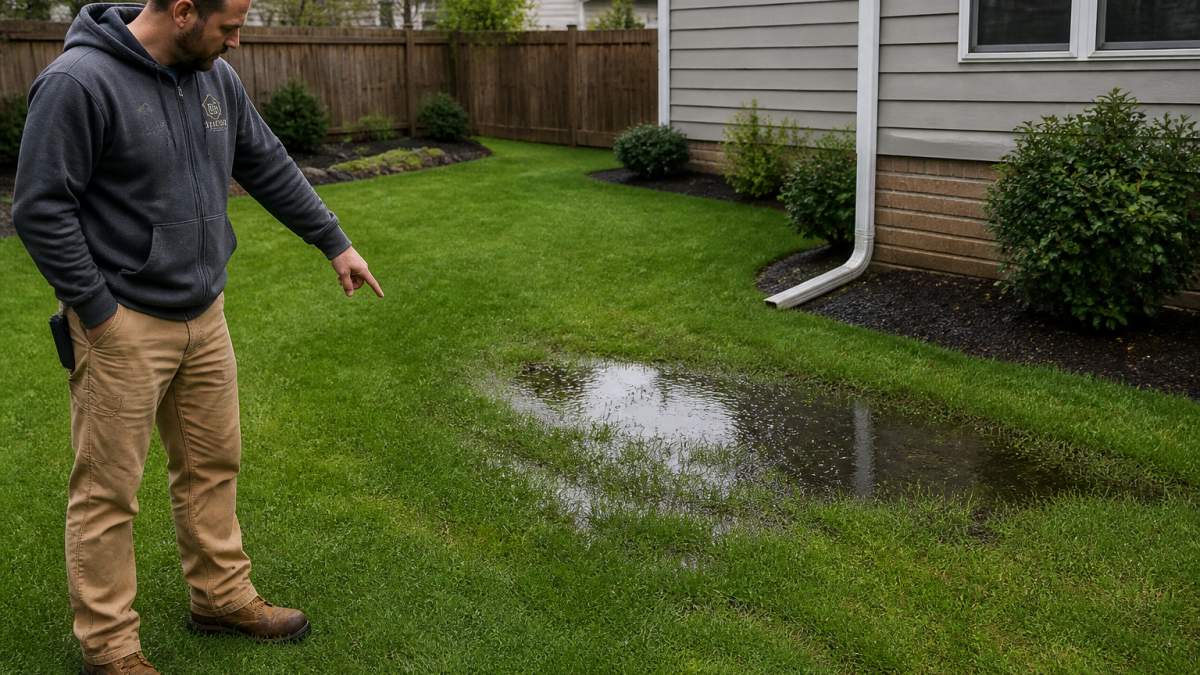
Yard grading for drainage means shaping the soil so the surface slopes away from the house and toward a safe outlet. The goal is a steady downward slope, not a steep hill.
The Slope Standard and Why It Matters
The widely accepted target is a slope of about one percent, roughly one inch of drop per foot, moving away from the foundation for the first six to ten feet.
A one-inch-per-foot drop is nearly invisible, so do not measure by eye. Use a four-foot level with a one-inch shim, or a string line with a line level. On longer runs, a rented laser level gives a reliable read in minutes.
Diagnosing Whether Grading Is Actually the Problem
Before you move soil, confirm grading, not a blocked outlet or high water table, is the cause. If water sheets toward the foundation from the lawn, grading is the culprit.
A simple field test: dig a small test hole about twelve inches deep in the low area and fill it with water. If it drains within a few hours, the soil percolates and grading can work.
How to Regrade Without Creating New Problems
- Add soil to low spots rather than digging them deeper. Digging creates a new basin that collects water.
- Use a mix that compacts well, a blend of topsoil and subsoil, not straight sand. Sand does not hold shape and washes out.
- Keep the slope continuous. Even a small dip traps water and defeats the grade.
Verifying the Grade Worked
Grading is only proven by the next storm. After a heavy rain, check three things: water no longer sheets toward the foundation, the low spot no longer holds standing water, and no new erosion channels have formed.
If your low spot sits where you want a patio or deck, fixing the grade is part of that build. Our custom deck and patio team plans drainage into the base before a single board goes down, so the finished surface and the grade work together instead of fighting each other.
Downspout Drainage Solutions That Move Water Away From the House
Downspout drainage solutions are the cheapest fix on this list, and the most often skipped.
Start simple:
- Add splash blocks to push water a few feet out.
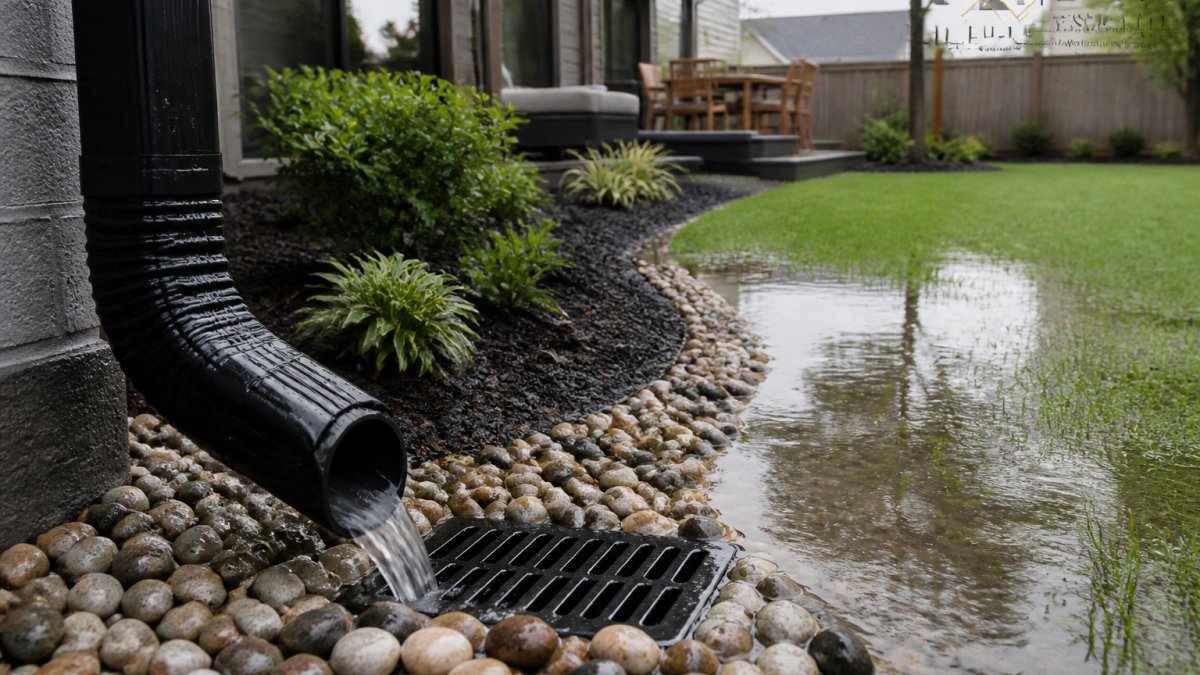
- Extend downspouts with buried pipe to a daylight outlet.
- Point outlets toward a slope, not a low spot.
For longer runs, bury a solid pipe and discharge it where the ground falls away. Pop-up emitters work, but they freeze and clog, so plan for maintenance.
The EPA's guidance on managing stormwater at home is a useful reference for where runoff should go and what not to send into storm sewers.
How to Fix a Waterlogged Yard With Soil and Lawn Changes
Fixing a waterlogged yard starts with the soil, not the grass. If water sits for days after rain, the soil is compacted or clay-heavy, and no drain will fix a lawn that cannot absorb water.
Improve it in layers:
- Aerate the lawn to open compacted soil.
- Top-dress with compost to build structure.
- Add sand only if the soil is heavy clay, and mix it in.
Soil drainage improves over seasons, not weeks, so plan for a year of small changes. For beds and borders, a rain garden does the same job with plants that drink up runoff.
French Drain Installation: When a Buried Drain Earns Its Keep
French drain installation is worth the digging when water crosses the yard from an upstream source and there is no easy surface fix. A French drain is a gravel-filled trench with a perforated pipe that collects subsurface water and carries it to an outlet.
It earns its keep when:
- Water flows across the property from a neighbor or slope
- The soil stays wet well below the surface
- Surface grading alone cannot redirect the flow
It does not fix a low spot with no outlet, and it will not help if the outlet is higher than the drain.
Key build details:
- Line the trench with landscape fabric.
- Use washed stone, not crusher run.
- Keep a steady fall toward the outlet.
Swales, Dry Creek Beds, and Rain Gardens: Surface Drainage That Looks Intentional
Surface drainage can be beautiful. A swale, dry creek bed, or rain garden moves and holds water above ground, and each can look like a design feature instead of a repair.
- Swale: a shallow, vegetated channel that carries runoff.
- Dry creek bed: a lined channel of riprap and stone that handles heavy flow.
- Rain garden: a planted depression that soaks up runoff.
These work best on gentle slopes and where you want the fix to blend into the landscape. They also cost less than buried drains and are easier to maintain.
If your drainage fix sits beside a future pavilion or outdoor kitchen, plan them together. Our pergola and pavilion team designs structures and grade as one system so water never pools underfoot.
Permits, Property Lines, and Utility Checks Before You Dig
Permits, property lines, and utility checks come before any shovel hits the ground. Most surface fixes, regrading a lawn, extending a downspout, planting a rain garden, need no permit. But buried drains, regrading that changes flow onto a neighbor, and work near easements or utility corridors can trigger review.
Call 811 Before You Dig
The first call is to 811, the national call-before-you-dig service. It is free, and in most states you are required by law to notify utility operators before excavation. Marking typically happens within a few business days. Do not dig until marks are in place, and hand-dig carefully within the tolerance zone. Private lines, irrigation, landscape lighting, gas lines to a grill or pool heater, and invisible fencing, are not marked by 811 and are the homeowner's responsibility to locate.
Property Lines and Drainage Easements
Confirm your property lines before you design any outlet. A drainage fix that sends water onto a neighbor's lot can create a legal problem, treated in many jurisdictions as a nuisance or trespass. Keep every outlet, swale, and discharge point inside your own property line. Also check your plat and title work for drainage easements, building a dry well or rain garden inside one can force you to remove it later.
Legal Discharge: Where the Water Can Go
Where runoff is allowed to go depends on local stormwater rules, which vary by jurisdiction. In general:
- Do not discharge into a sanitary sewer. That is prohibited in most systems and can overload the treatment plant.
- Do not discharge into a storm sewer or ditch without confirming local rules; some jurisdictions allow it, others prohibit it, and some require a permit.
- Do not direct concentrated flow onto a neighboring property.
- Discharge to a daylight outlet, a vegetated area, or a dry well on your own lot where local rules allow.
Your local building department or stormwater authority is the authority on what is permitted in your area. The EPA's stormwater program explains the federal framework, but the enforceable rules are local.
When to Bring in a Professional
Bring in a licensed professional when:
- Excavation is deeper than a foot or two, or near the foundation.
- Work is within a utility easement or near marked lines.
- The fix requires connecting to a storm system or altering a swale that crosses a property line.
- The grade change affects a retaining wall, deck footing, or pool structure.
A professional can also confirm the outlet will actually work before you invest in the digging.
Conclusion
Drainage problems rarely fix themselves, and the wrong fix can cost more than doing it right the first time.
At Lush Design Build LLC, we plan drainage into every outdoor project, from custom decks and patios to sunrooms and pool houses.
Ready to build an outdoor space that handles water correctly from day one? Get a project estimate and let our team plan the details.
Frequently Asked Questions
What can I do to fix my waterlogged backyard?
Start by finding where the water comes from. Watch the yard during a heavy rain and note whether water pools in low spots, runs off a slope, or dumps from gutters and downspouts. Then match the fix to the cause: regrade low areas so the surface slopes away from the house, extend downspouts to a splash block or buried line, aerate and amend compacted soil, or add a French drain or swale to carry water to a safe discharge point. One fix rarely solves everything, so plan the combination that handles both the source and the destination.
Can I dig a hole and fill it with gravel for drainage?
A gravel-filled hole, sometimes called a dry well, only works when the soil around it drains well and the hole is sized for the volume of water it receives. In heavy clay, a small gravel pit fills up and stops absorbing, so water backs up and the problem returns. A dry well also needs to sit well away from the foundation and property lines. Before digging, confirm where utility lines run and check local rules on discharging water. For most yards, a graded swale or a properly sloped French drain handles water more reliably than a single pit.
How much does it cost to fix yard drainage?
Cost depends on the cause, the size of the area, and the fix you choose. Simple steps like extending a downspout or reseeding a low spot cost far less than regrading a large yard or installing a long French drain. Trench drains, catch basins, and dry wells add materials and labor. Because every yard is different, ask a contractor to walk the property and quote the specific work rather than relying on a per-square-foot estimate. Get the scope in writing, including excavation, gravel, pipe, and restoration of lawn or hardscape.
When should I call a drainage or construction professional?
Call a professional when water sits against the foundation, when a low spot keeps returning after regrading, when the fix requires excavation near utilities or property lines, or when drainage problems appear alongside cracks in walls, sticking doors, or a damp basement. Those symptoms can point to a foundation or plumbing issue rather than a surface drainage problem. A design-build contractor can assess the grade, plan the drainage, and coordinate any structural or hardscape work so the repair holds up.