
 how-to
7 Steps to Design a Backyard That Drains Correctly
Last Updated: October 26, 2026
Quick Summary
Design backyard drainage by reading the site first: flag low spots and soggy patches after heavy rain, run a percolation test to learn how fast your soil drains, then regrade so the ground falls away from the foundation. Only then choose between a French drain and a swale, and confirm a legal outlet before digging.
- Water that lingers for days is a drainage problem, not a watering problem.
- A percolation test means digging a foot-deep hole, filling it, and timing how long it takes to empty.
- Adding topsoil against the house to hide a low spot pushes water toward the foundation.
- A 2,000-square-foot roof section sheds about 1,200 gallons in a one-inch storm.
- Keep rain garden ponding depth shallow, typically 6 to 9 inches, so water drains within a day.
Table of Contents
- How to Design Backyard Drainage: Start With the Water, Not the Pipe
- Step 1: Read the Signs of Poor Yard Drainage
- Step 2: Test Soil Drainage Before You Dig
- Step 3: Plan Landscape Grading for Drainage
- Step 4: Choose Between French Drain Installation and a Backyard Swale Design
- Step 5: Pick Your Outlet and Confirm Where Water May Legally Go
- Step 6: Build the Finish Layer With Rain Gardens and Water-Absorbing Plants
- The Yard Drainage Mistakes That Undo Good Design
- Frequently Asked Questions
How to Design Backyard Drainage: Start With the Water, Not the Pipe
Most homeowners start with the product. They buy a length of perforated pipe, dig a trench, and hope the water finds it. That order is backwards. Learning how to design backyard for drainage means reading the site first, then choosing the fix. At Lush Design Build LLC, we plan outdoor spaces across Carmel, Fishers, and Zionsville, and the drainage plan always comes before the patio plan.
Water follows the path of least resistance. Your job is to give it a path that leads away from the house.
Here is the sequence we use, from first walkthrough to finished landscape.
Step 1: Read the Signs of Poor Yard Drainage
Walk the yard after a heavy rain. That is when the site tells you the truth. A dry yard in July can hide a serious problem.
Where Standing Water Tells You the Truth
- Low spots that hold water for more than a day
- Soggy patches near downspout outlets
- Water stains on the foundation or crawl space wall
- Moss or bare soil where grass will not grow
- A sump pump that runs long after the rain stops
Mark each spot with a flag. You are building a map of where water collects. Watch out: a damp corner that dries within a few hours is usually fine. Water that lingers for days is a drainage problem, not a watering problem.
Step 2: Test Soil Drainage Before You Dig
Soil type decides which fix will work. Clay holds water. Sand lets it go. Most yards around here are a mix, often with heavy clay underneath.
Run a simple percolation test:
- Dig a hole about a foot deep.
- Fill it with water and let it drain overnight.
- Refill it the next morning and time how long it takes to empty.
If the hole still holds water after several hours, your soil drains slowly. That rules out a rain garden in that spot and points toward a piped system or a swale. The USDA Natural Resources Conservation Service soil survey can confirm your soil type by address.
Step 3: Plan Landscape Grading for Drainage
Landscape grading for drainage means shaping the soil so water flows away from the house on a steady slope. The ground should fall away from the foundation on every side.

A common mistake is adding topsoil against the house to hide a low spot. That pushes water toward the foundation instead of away. Regrade the whole area, not just the puddle.
Sloped lots need extra planning. If your yard drops sharply or has an odd shape, see our guide to custom patio design for sloped yards and designing outdoor spaces for odd shaped backyards before you finalize a grading plan.
Step 4: Choose Between French Drain Installation and a Backyard Swale Design
Two fixes handle most residential drainage. French drain installation moves water underground in a gravel trench with perforated pipe. A backyard swale design moves it across the surface in a shallow, grassy channel.
| Feature | French Drain | Backyard Swale |
|---|---|---|
| Water path | Underground pipe | Surface channel |
| Best for | Point problems, tight yards | Wide, shallow flow |
| Space needed | Narrow trench | Several feet wide |
| Maintenance | Flush and inspect | Mow and re-grade edges |
| Visible? | No | Yes, but plantable |
For a step-by-step plan covering grading, downspouts, and both fixes, read how to handle backyard drainage issues.
Backyard Swale Design for Shallow, Wide Water Flow
A swale works when water sheets across a broad area. Keep the sides gentle, line the channel with grass or native plants, and give it a clear outlet. A swale that dead-ends becomes a pond.
Step 5: Pick Your Outlet and Confirm Where Water May Legally Go
Every drainage system needs an outlet. Without one, you are just moving the puddle. The outlet is also where most legal problems begin, so design it before you dig the trench, not after.
Size the Outlet to the Water It Receives
An outlet that is undersized for the contributing area backs up in the first heavy rain. A practical rule of thumb many practitioners use: one square foot of roof plan area produces roughly 0.6 gallons of runoff per inch of rainfall. A 2,000-square-foot roof section therefore sheds about 1,200 gallons in a one-inch storm. That volume has to leave the site at the same rate it arrives, or the system surcharges.
Match the outlet to that flow:
- Daylight pipe, the pipe daylights at a lower grade, ideally on a slope or into a vegetated swale. Keep the outlet above the receiving water level so it does not back-siphon.
- Dry well, a gravel-filled pit that stores and infiltrates runoff. Size it to the volume above and confirm the soil percolates; a dry well in clay is a bucket.
- Storm sewer connection, only where the local authority allows it, and usually only with a permit and an approved inlet.
- Vegetated swale or rain garden overflow, a surface route to a legal discharge point, with a clear overflow path for extreme storms.
Verify Where Water May Legally Go
Before you tie into anything, confirm three things:
- Your local code. Many municipalities restrict what may enter the storm system and prohibit routing roof or surface water to the curb or right-of-way. Check with the local building or public works department.
- Recorded easements. A drainage easement on your plat may give you a legal path to a storm system, or it may restrict what you can build over. Review the recorded plat and any easement documents before finalizing the plan.
- The downstream neighbor. Discharging water onto a neighbor's lot can create a legal problem and a dispute. The safe design keeps discharge on your own property or in an approved public system.
The EPA stormwater program explains why storm sewer discharge is regulated in the first place.
Plan for the Outlet to Stay Clear
An outlet is only as good as its maintenance. Screen the discharge point against debris, keep it above the receiving grade, and inspect it after every major storm. A buried or silted outlet turns a working system into a flooded yard.
Step 6: Build the Finish Layer With Rain Gardens and Water-Absorbing Plants
Once the water has a path, dress the space. A rain garden is a shallow planted basin that catches runoff and lets it soak in. It works best in slow-draining areas with a clear overflow route, and it fails when it is sized by the space left over rather than by the water it must handle.
Design the Basin to the Runoff
A rain garden is a designed infiltration feature, not a flower bed in a hole. Three criteria drive the design:
- Contributing area. Calculate the roof, patio, and lawn area that drains to the basin. A common target is a basin surface area equal to roughly 5 to 10 percent of the contributing impervious area, adjusted for soil infiltration rate.
- Depth and ponding. Keep the ponding depth shallow, typically 6 to 9 inches, so water drains within a day. Deeper basins hold water too long and stress plants.
- Overflow. Every rain garden needs a designed overflow at the top of the ponding depth that routes extreme storm flow to a legal outlet. A basin without overflow becomes a pond in a 10-year storm.
Amend the soil if it is heavy clay. A mix of sand, topsoil, and compost improves infiltration and supports the plants. Confirm the infiltration rate with the percolation test from Step 2 before you commit to a rain garden in that spot.
Choose Plants for the Water They Will See
Plant in zones: wet-tolerant species in the basin bottom, mid-zone plants on the slopes, and dry-tolerant species on the rim. Good water-absorbing plants for this region include:
- Switchgrass and little bluestem
- Joe-Pye weed and ironweed
- Blue flag iris
- Winterberry holly
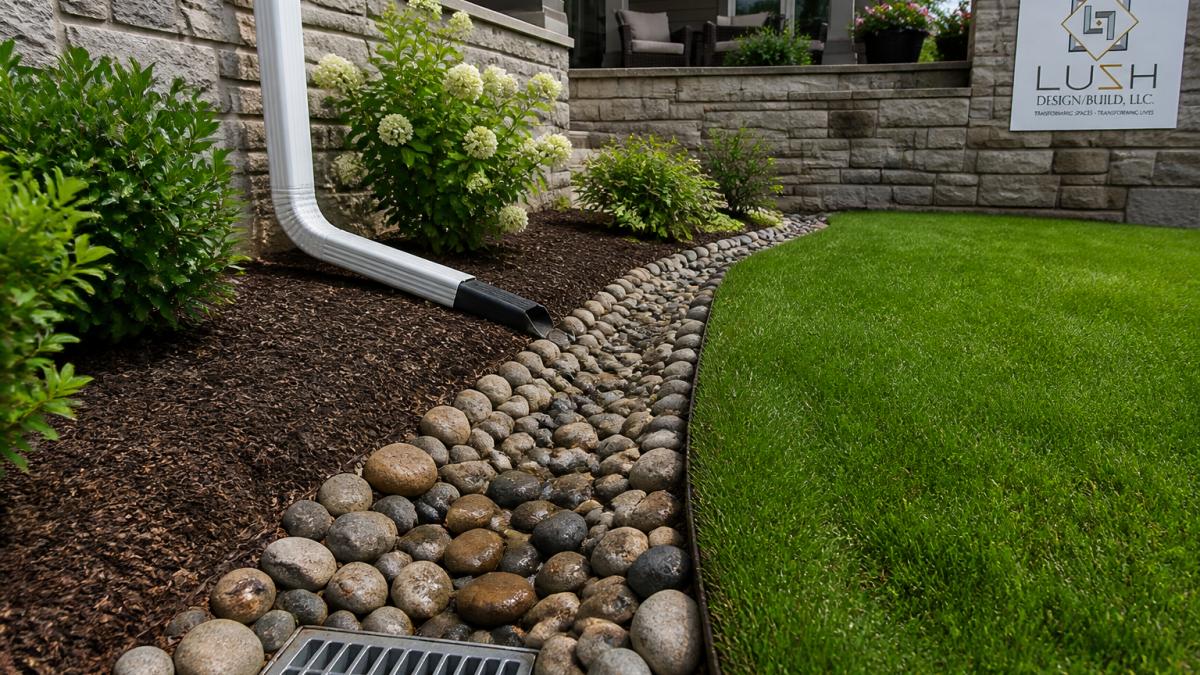
A dry creek bed of river rock can carry water across a lawn and look intentional. Both options turn a drainage fix into a design feature, but only when the feature is sized to the water and given a clear overflow.
If you would rather hand the whole plan to a team that builds it, review our services or contact us to talk through your site.
The Yard Drainage Mistakes That Undo Good Design
Even a well-planned system fails when these errors creep in:
- No outlet. Pipe that ends in the lawn just relocates the problem.
- Wrong slope. A trench that runs flat or uphill traps water.
- Clogged pipe. Perforated pipe without a filter fabric or gravel envelope silts up.
- Water sent to a neighbor. This creates disputes and can violate local rules.
- No maintenance plan. Flush the system and clear the outlet each season.
If you would rather hand the whole plan to a team that builds it, review our services or contact us to talk through your site.
Frequently Asked Questions
How do I add drainage to my yard without tearing up the whole lawn?
Start with the cheapest interventions first. Regrade low spots so water sheet-flows away from the foundation, extend downspouts several feet from the house, and add a shallow swale along the natural low line. If water still collects, a French drain along that line handles the rest. Trench work is limited to one or two runs rather than the full yard, so lawn disturbance stays contained. A design-build contractor can map the water path before any digging starts.
What are the most common yard drainage mistakes?
Three repeat offenders. First, installing a French drain with no defined outlet, so the pipe fills and the problem moves a few feet downhill. Second, backfilling a trench with soil instead of washed gravel and filter fabric, which clogs the perforations within a season or two. Third, grading soil against the foundation instead of away from it. Each mistake is expensive to reverse because the fix means re-excavating what was just buried.
When should you use a French drain instead of a swale?
A swale suits a shallow, wide channel where you have room for a gentle depression and want the water to move slowly across the surface. A French drain fits tight spaces, steep lots, and spots where a visible trench would ruin the design. If the water needs to travel under a patio, deck, or walkway, the buried pipe wins. Many yards need both: a swale to collect, a French drain to carry water to the outlet.
When should a drainage problem be assessed by a professional?
Call a professional when water reaches the foundation, when a soggy area returns after every storm despite surface fixes, or when the lot slopes toward the house. Also call before you dig near utility lines, easements, or a property line, since discharge onto a neighbor's land can create a legal problem. A site assessment maps elevation, soil, and the legal outlet before anyone commits to a design.
Drainage is the part of an outdoor project nobody sees, and it decides whether the space holds up. If you are planning a patio, pavilion, or pool house in Carmel, Zionsville, or Westfield, get the water right first. Lush Design Build LLC brings full-service design, careful grading, and premium materials to projects that need to last. Get a project estimate and start with a walkthrough of your yard.